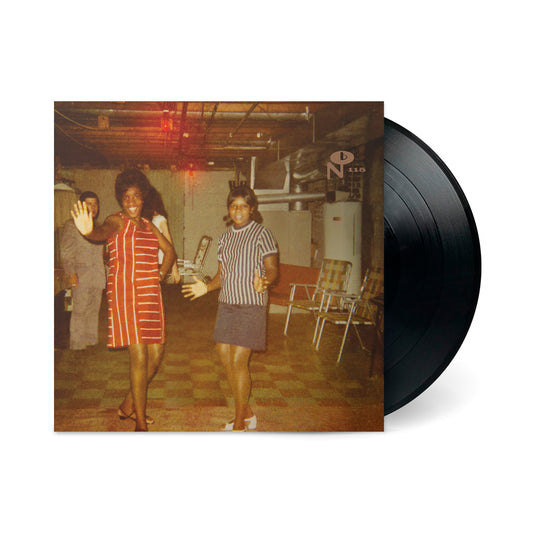
Most music is already lost. From the unrecorded harps of Mesopotamia to the Myspace.com data migration wipe of 2019, the overwhelming bulk of what has been played will never be heard again. The only exceptions to this rule? A limited selection from the last 150 years of recorded sound. “You and Me” is one of those exceptions, a song that might’ve been sung by any one of 10,000 other groups, cut live to two-track tape on any day in the 1960s, in any given storefront studio in America. It’s a sibling to every shred of melody etched into magnetic substrate by our grandparents, fathers, uncles, aunts, and mothers, hoping to capture what would otherwise fade at the threshold of the family kitchen, a cousin to every hummable keepsake of youthful optimism, when anything seemed possible with a little luck and maybe a bit of talent. Untold legions of similar exceptions have been lost to fires, floods, moves, and divorces, while just as many were tossed into dumpsters when the studio shuttered. Among the teeming billions of feet of audition tape, the entire recorded output of Penny & the Quarters consists of a single 7” reel. Not even Penny and her brothers— Preston, Johnny, and Donald—ever possessed a copy.
In the spring of 2005, on the south side of Columbus, Ohio, on a crisp Saturday morning, record flipper Blake Oliver was halfway through his usual estate sale rounds when he came across a box of reel-to-reel tapes. For $20, Oliver acquired the 31 analog reels which, as it happened, were the last remnants of defense contractor Clem Price and lawyer George Beter’s Harmonic Sounds recording studio and Prix record company. Price’s daughter had recently passed, and it would be the subsequent sale of her possessions that placed an incomparable fragment of his life’s enterprise into the hands of a stranger who dealt in rare records. Despite his commercial interest in the tapes, Oliver knew these recordings belonged with someone steeped in the most minute history of soul music, and more specifically the soul music of Columbus, Ohio. They belonged with Dante Carfagna.
"The record is a lasting, physical object, it will survive long after the participants have passed, moved on, or forgotten their endeavors. It is the postcard from the past that lets future humans know that something indeed happened... The vinyl record is frequently the only proof that a creative human event actually took place... A one-of-a-kind tape or reel is still the vessel for capture, but the likelihood of a stranger finding it loose in the world is far less likely." -Dante Carfagna
Born in Columbus in 1975, Dante Carfagna was just seven years old when he first tuned his radio to a weekly program called “Sunday Night At The Raps.” “My parents were heads,” Carfagna said, “but they were suburban heads-that-had-a-bag-of-grass-in-the-end-table kind of folks.” The westward spread of hip-hop caught Carfagna right between his buckeyes, infecting this first son of an Italian grocery magnate with a lifelong desire to listen deeper into the unknown. But as hip-hop was shifting from LinnDrums and synthesizers to beat-driven samples sourced from pre-existing records, Dante’s interest in the burgeoning genre changed in scope as well. “There was something utterly intriguing about samples to me,” Carfagna said. “I would buy a new rap record and the first thing I would do is just sit there and try to figure out what all of the source material was.”
That burgeoning fascination bled into Carfagna making beats for his first and only crew, The Poets of Heresy. Later, after a chance encounter with the rapper in Miami, he’d provide uncounted samples and produce tracks for Public Enemy “minister of information” Professor Griff. “I think I was a little protosavvy, because somehow I already understood it was about the unknown, not the known,” Carfagna said, recalling his earliest trials in purchasing records as sample fodder. “If I saw something I’d never seen before [alongside] a James Brown record, I’d take the chance on the thing I’d never seen before. I knew the guys I was going to play it for weren’t going to know what it was, and at 15 you’re trying to puff your chest out as often as possible, so you played some monster break that no one had used before.”
After a stint studying painting at the Kansas City Art Institute and beefing up his collection at The Record Exchange, Carfagna settled in Chicago in late 1998. At the time, the third coast’s underground music business was exploding, with Drag City, Cajual, Touch & Go, Thrill Jockey, Prescription, Southern, and Victory Records all posted in their unique enclaves across the city, their various bands and distribution side hustles feeding a dense constellation of bars and venues. Dive drinking holes on nearly every corner hosted an endless array of alternative DJ nights: The Rainbo in Wicker Park, Delilah’s in Lincoln Park, Funky Buddha Lounge in the West Loop, and the Bucktown institution Danny’s Tavern, home of “Sheer Magic.” Named after Ice Cold Love’s 1973 single for Youngstown, Ohio’s Tammy label, “Sheer Magic” was a monthly funk 45 dance party organized by Carfanga’s college buddy Courtland Green. “It was a perfect case of right time, right people, right venue, right music,” Carfagna wrote. “This was pre-YouTube, pre-Discogs, pre-Shazam, pre-everything really. You came to our night and heard sounds you simply could not hear anywhere else, much less find... Throw in Shirley selling $5 weed muffins to the whole place and it was kismet as fuck. So many of the records that are now ‘classics’ across the globe were first played at ‘Sheer Magic’ to utter enthusiasm. When shit was on full throb, the floor would actually be waving from wall to wall to the point that they needed to reinforce it from the basement.”
It was here inside a dimly lit tavern on Chicago’s near-north side that the diabolic seed of Eccentric Soul was planted. As a certain six-hour night of dancing and drunken debauchery wore on, the tempo gradually began to slow. While slurring and stumbling Danny’s patrons moved from the wooden dance floor to the bar’s darker alcoves, Carfagna delved deeper into his collection of regional soul obscurities. “You Can’t Blame Me”—Johnson, Hawkins, Tatum & Durr’s 1971 down-tempo ballad for the Columbus-based Capsoul label—was a last-call staple, one that affected Sheer Magic devotee Rob Sevier deeply. “Virgil Johnson’s vocal performance on that record is particularly moving—it defines what Eccentric Soul is in pursuit of,” Sevier said.

“A whole that emerges from a sum total of mostly imperfections and accidents.” A Chicagoland native, Sevier was toggling between selling European imports for Dirk van den Heuvel’s dance music-focused Groove Distribution by day and issuing glitchy electronic records with the Milwaukee-based Wobblyhead Records collective in his spare time. A compilation under the Eccentric Soul heading was brewing in his brain, informed largely by the 45s Carfagna was spinning the first Tuesday of each month at Danny’s. “While my friends were dressing up in haute couture and dancing, I was the one trainspotting and checking out the labels,” Sevier recalled.
In 2003, Tom Lunt and I were in the embryonic stages of forming The Numero Group, when I met Rob Sevier through mutual friend and “Sheer Magic” enthusiast Betsy Yagunic. Sevier arrived at my third floor Bucktown walk-up apartment with a small box of 45s and a concept. The first record he played was “You Can’t Blame Me,” and his enthusiasm for its off-kilter arrangement and Johnson’s unhinged performance was infectious. I was sold on Eccentric Soul before he flipped to the B-side. A few days later, I was on the phone with Capsoul Records proprietor Bill Moss, interrogating him about the song and looking to include a reproduction of the 45 in Sevier’s incipient box set of left-field American soul music discs. But Moss, who we’d soon recognize as an endless font of true wisdom, had other ideas. “There’s a lot more to Capsoul than ‘You Can’t Blame Me,’” Moss said. He could not have been more right.
A plan was hatched to meet Moss at his Franklin Park two-flat on Columbus’s near-east side, with Yagunic offering up her purple Saturn station wagon for the 364-mile expedition. We arrived on a Saturday afternoon and drank lemonade freshly squeezed by Bill’s wife Ruth. As I stumbled through a rudimentary PowerPoint presentation, Bill’s eyes began to light up. An hour later, we had shaken hands, the framework for a deal in place, and were making our way to a nearby Courtyard Marriott to swim and dream out loud. It would hardly be the last night we’d spend in Cap City.
Our first compact disc, Eccentric Soul: The Capsoul Label, was issued nine months later to great fanfare. Shortly before his passing in August 2005, Bill Moss sat down with NPR’s Liane Hansen. “I don’t think there has been a day that has gone by that I have not thought about that record company,” Moss said. “It’s like the first woman you ever really loved. You never get over that one.” In her verbose introduction to Weekend Edition, Hansen called the Capsoul label “Ohio’s answer to Motown.” But just as Motown had contended with Detroit competitors in Ric Tic, Golden World, and Fortune, so too did Capsoul in Columbus. For starters, there was Jack Casey’s Rome, Tom Murphy’s Owl, and John Hull’s Mus-I-Col. And then, tucked into a two-story Victorian at 921 East Broad Street, there was Harmonic Sounds Ltd. and its in-house Prix label. We just didn’t know it yet.
While “Sheer Magic” was helping push underground funk to the surface streets, Dante Carfagna was considering his place in the recontextualization and conservancy of this transitional period in Black music. “Soul and funk is now 30 years old,” he said in 2005, “so the canonization window is closing and you can posit that, as a movement, it has a semidefinitive beginning and end, before it evolved into disco and hip-hop... We’re talking about the lineage of Black music, and I think people are beginning to understand that the music needs to be preserved.” His first attempt at documenting the funk resurgence was a collaboration with Now Again’s Eothen “Egon” Alapatt called The Funk 45 Files, a 25-song cassette-only mix for Big Daddy—the new millennium’s bi-monthly bible of funk, breakbeats, and graffiti culture at large, to which they contributed a regular column.
From there, Carfagna moved on to his 2002 bootleg masterpiece Chains And Black Exhaust, which chronicled a particular strain of Hendrix-worshiping funk that had roared through America in the ’70s. The compilation was heavy on Ohio acts in particular, including Cleveland’s Creations Unlimited, Sir Stanley, and Hot Chocolate, Dayton’s Stone Coal White, and Youngstown’s Iron Knowledge. All told, Ohio acts could claim nearly a quarter of the disc’s run time. Issued via Chad Weekley’s Memphix concern in a standard jewel case with an unassuming photo of a Chicago Black motorcycle club on the cover and no tracklisting, the initial pressing of Chains sold out in less than a month. Carfagna followed it up in 2003 with Midwest Funk for Gerald Short’s UK-based Jazzman label, again loading the collection to the gills with Ohio acts, including Barbara Howard, The Dayton Sidewinders, Soul Tornadoes, Harvey & The Phenomenals, The Wallace Brothers, and The Fabulous Originals. A New Day: The Complete Mus-I-Col Recordings of J.C. Davis, compiling tracks by the one-time bandleader for the James Brown Revue, followed in 2005 on Josh Davis’s Cali-Tex imprint. That LP’s release capped an incredible run of archival efforts in underground funk, and as fans, disciples, and the unseasoned founders of The Numero Group, it was hard not to feel a little sidelined. Still, by the time Blake Oliver turned over the Prix tapes to Dante, there wasn’t another label in the world better equipped for documenting regional soul labels.
Since its 2003 inception, Numero had prided itself on variety. Three years deep into the experiment, we’d already released discs delving into Eccentric Soul from Columbus, Chicago, Miami, and Detroit, electro samba from Belgium, funk from Belize, the private press output of Laurel Canyon acolytes, American skinny tie power pop, and hillbilly gospel. Waiting in the wings were a collection of funky gospel, an album’s worth of orchestral UK folk, and the soulful handiwork of both Mighty Mike Lenaburg and the storied Twinight label. When Rob Sevier showed up at our Hoyne Street office with a CD-R of tracks from another Columbus, Ohio, soul label, our initial hesitation was based mostly on geography. Didn’t it seem too soon for a return to Columbus? Admittedly, our well of projects was not exactly bottomless, and we gave the thumbs up to the Prix label based almost entirely on Carfagna’s enthusiasm. There were more issues than just the geographical. Prix’s story was not so much a tale of dashed creativity as a series of unremarkable events carried out by equally unremarkable characters. It went like this: A defense contractor (Price) and a lawyer (Beter) got together and opened a recording studio. They tracked and released a dozen engaging but entirely unknown soul records before calling it quits in 1974. There weren’t any hits. There weren’t even any near-misses. Our subsequent liner notes captured the general tedium perfectly: “A complex plan was hatched that involved Price finding Beter a job, and Beter subsequently funding the venture and handling the legal end. A few phone calls and a little skillful political wrangling landed Beter a high-ranking position in the Attorney General’s office, and subsequently allowed the duo to open up Harmonic Sounds. The Prix label, a play on Price, was formed to release the audio fruits of their labor.”

This earliest draft of Eccentric Soul: The Prix Label focused primarily on the issued singles by Joe King, Eddie Ray, former Capsoul-er Marion Black, The Soul Ensemble, O.F.S. Unlimited, and The Royal Esquires. Fulgent 45s all—just not quite a double album’s worth of material. It was only as we began working through those 31 reels that the compilation began to take form. Ray’s unissued third single, the could’ve-been-massive-on-the-Northern-scene “Wait A Minute,” was the only truly finished work left in Prix’s thin vault. The track worked its way into its ultimate slot as album opener.
Born in Griffin, Georgia, Eddie Ray left home during his early teens after receiving a letter from his cousin, which told of good life and plentiful work in South Florida. Ray worked the talent shows and eventually landed a weeknight gig at the King of Hearts club with singers Sam Moore and David Prater. Unfortunately, Ray split town before an Atlantic deal was tendered and the names Sam & Dave became the biggest in R&B. While “You Don’t Know Like I Know” was busy racing up the charts, Ray was dogging it in the Northeast with the 7 Blends, before finally splitting for sunny Palo Alto, California, to start his own band. Ray’s Meditations would zigzag across the country before finally touching down in Columbus for a performance at the Bottom’s Up Lounge.
As on most nights at the Bottom’s Up, trumpeter Al Carey of the J. C. Davis Band was in the audience. Carey rang Davis and told him they needed to recruit the singer he had just seen. Ray jumped the Meditations ship and immediately hit the road with the J. C. Davis Band, but would find himself out of work when Davis put the group on hiatus for his new bride in Montreal. Having no place to go, Ray returned to Columbus with the rest of the band and began his pursuit of a solo career. After several national offers emerged and wilted, he found himself at the door of 921 East Broad Street.
It was agreed from the beginning that the arrangement would be temporary, as both Ray and Price were looking for a major label to pick the contract up nationally. They rehearsed and recorded vigilantly for Prix’s first release of 1970, “You Got Me” b/w “Glad I Found You.” Both the demos and the released recordings display the passion and talent of a major star, but the promotions aspect of the operation continued to be ineffective. After a live single recorded at the Yellow Room and the aborted third release “Wait A Minute,” Eddie Ray and Clem Price parted ways. Ray self-produced three more singles for the Hot Sox and Blue Ash labels over the next few years, but never received his much-deserved exposure.

In Eddie Ray, we had our album’s star, or so we thought. But what captured our imagination most was a series of rehearsals by Ray, Joe King, songwriter Jay Robinson, and a mysterious group listed as Penny & The Quarters. Our double LP compilation of the Prix label’s work cordoned off this handful of sketches from the more-polished recordings, housing them on Side D under the “Extended Play” heading. And with a number of strong contenders vying for placement on that fourth side, Penny’s “You And Me” almost missed the cut, landing as deep as deep cuts get, as the fifth of six extended play tracks.
“That song’s innocence grabbed me right away,” Sevier told The Guardian. “Penny’s performance is just devastating. Uniquely charming. But the song was anachronistic even in 1970, already quaint. Who would put this out, who would put it on the radio?” The June 2007 release of Eccentric Soul: The Prix Label proved to be Numero’s first taste of indifference. We’d managed to go 14 releases in a row without a miss—a tepid response was bound to crop up eventually. Reviews of the record were positive but scarce, and even though the coverage seemed to concur that the Extended Play tracks were the most arresting, none of it mentioned “You and Me” by name. Sales of both the CD and double LP editions were mediocre, our first record ever to linger on the shelves and a harbinger of what was to come. Numero, at just four years old, was already being eclipsed by a next generation of record hustlers with a new take on reskinning old music. We’d spend the next ten releases and two years in the dark. And while all of that apathy can’t be pinned on the release of Prix, it did feel convenient to lay blame at the doorstep of our first repeat. “I told you at the time that it was a bad idea to go back to Columbus so quickly,” our then-publicist Ken Weinstein said later. “Following up Capsoul was a nearly impossible task.”
It’s not that there were no Numero wins over the next couple years, it’s just that they arrived in non-round shapes and sizes far bigger than 12 inches. The next three Eccentric Soul titles, although ignored in lockstep by our once-insatiable fans in the media, found unlikely successes in the world of film and television. Every week, a doubly obscure Numero soul track found itself synched in one offbrand sitcom, family drama, or otherwise, including Joe King’s in-context role in the 2010 Showtime original The Big C.
“So can the man sing, or can he sing?” Idris Elba asked Laura Linney in the Season 1 episode “Blue-Eyed Iris.”
“He’s alright,” she replied.
Elba: “Alright? That is Joe King you’re talking about, young lady.”
Linney: “That’s his name? Joe King? Please tell me you’re ‘jo-king.’”
Elba: “Well, you can laugh all you want, but the man is a legend.”
In truth, King was anything but. He’d begun as guitarist for Lee Sykes and the Highlanders, a Columbus show band that released a lone 45 on the one-off Lemon Drop label in 1967, which led to a long-running engagement at the Lemon Drop club on High Street. It’s likely that he was discovered there by Price and invited to Prix’s woodshedding studio at 921 East Broad. King’s signature major chord picking and bluesy runs can be heard on many of the demos included here, but it was 1970’s “Speak On Up” that Beter and Price bet on for Prix’s sixth release. Before the singles were even pressed, King had been drafted and shipped off to Vietnam. He’d return as a changed man, but not to Harmonic Sounds, which by 1971 had relocated to Price’s Felix Drive home. King took up with local stage band The Crowd Pleasers, but departed prior to recording their P-Funk-worshiping album for Westbound. King’s last released recordings found him reteaming with Price as Joe King & Prophesy—their 1976 single for the half-life Disco label ended up doubling as a collective bow out of the music business.

Idris Elba’s insistence on Joe King’s legendary status came as news to Numero, although it was a fiction we could all get behind. Such modest infusions of notoriety and cash kept the label in the black while we outlined our box set-driven second act. We hired Kathryn Frazier at Biz 3 to craft a compelling new story about a Chicago record label that was rewriting the history of popular music. Billboard Magazine profiles and Grammy nominations ensued, our egos inflating such that we briefly considered selling the company to Atlantic Records. But it was a missive from Ryan Gosling—a client of Frazier’s then moonlighting as one half of ANTI- Records duo Dead Man’s Bones—that changed everything. In an email, Gosling had specified his credit card number, his shipping address, and his desire to own one copy of every album we’d ever released. We figured a bulk discount for the Oscar-nominated actor, packed up a large box, tossed in a thank you note, and closed the invoice.
Just a few months later, music supervisor Joe Rudge approached us with his interest in licensing Penny & the Quarters’ “You and Me” for the upcoming Ryan Gosling/Michelle Williams feature film Blue Valentine, directed by newcomer Derek Cianfrance. Rudge reported that, prior to shooting a frame, the production was already over budget. What funds were left for music wouldn’t make or break our week. If Rudge even took time to explain that “You And Me” was planned as the emotional centerpiece of the entire film, we certainly didn’t clock it.
“I got us a song, like our song that will just be for you and me,” Gosling says, as Blue Valentine protagonist Dean Pereira. “Cause everyone’s got songs... But they’re lame and they all share them. It’s disgusting... But not us. We’ve got our own song. You wanna listen to it?” For a $1500 fee, Numero licensed two uses of “You and Me” to the production, one with Gosling singing along, and a second for a scene in which he performed cunnilingus on Williams’ character. Considering the thousands of unsold Prix Label albums and CDs collecting dust in our warehouse, we were thrilled to be making anything off the project. But what came next was like a movie unto itself.
After premiering at Sundance, Cannes, and the Toronto International Film Festival to rave reviews, Blue Valentine went into limited release on December 29, 2010. Quickly, Oscar buzz around the indie darling intensified, bringing along with it a surge in downloads for “You and Me,” which peaked at around 10,000 per week—just as we began fielding calls from Columbus media outlets about a mysterious song credited only to Penny & the Quarters.
“The search is on for a long-lost Columbus vocal group whose never-released song from the 1970s is drawing global attention in a movie soundtrack,” Jeffrey Sheban reported for the daily Columbus Dispatch. Not to be outdone, Columbus alt-weekly The Other Paper put the story on the cover of their January 27, 2011 issue under the heading “Lost Soul.” That January turned out to be a watershed month for forgotten Columbus singers, with homeless voiceover artist Ted Williams rediscovered while singing for change at freeway offramps around town. With soulful civic pride in central Ohio’s air, Dispatch reader Dave Ardit gave Numero a ring to relay a potential clue about the author of “You and Me.” “It had been hidden in plain sight the entire time,” Sevier said. “Dave Ardit was in the studio the day Jay Robinson recorded the song with The Four Supremes in 1974. Dante even had a copy of the 45.”
Jay Robinson was one of a handful of local songwriters hanging out at Clem Price’s Victorian-cum-recording studio on East Broad. He’d formed the Fabulous Supremes back in the late ‘50s with his East High Classmates Edward Dumas, Eddie Jackson, Forest Porter, and Robert Isbell, who became The Columbus Supremes when a similarly named Detroit girl group began to chart nationally. How Robinson ended up at Prix is unknown, but he tracked several sessions worth of demos at Harmonic Sounds over the course of 1970. “You and Me” was just one of four forgotten songs he cut with Penny & the Quarters, with the similarly themed “You Are Mine” backed by Joe King on guitar and Eddie Ray on bongos. Robinson also served briefly as director for a completely undocumented TV talent show called Caleidoscope, whose fundraising letter invoked an ethic familiar to impresarios like Bill Moss and Motown’s Berry Gordy: “Caleidoscope is a television program sponsored by local advertisers that believe in ‘mining for gold’ first in their own backyard.”
Harmonic Sounds was a fading memory for Robinson when he resurrected “You and Me” in April 1974 with his reconstituted Supremes for the one-shot Grog label. “I was at the Grog sessions here at Mus-I-Col,” Ardit said, explaining his chance connection to the song. “Bobby Hughes and John Clifton—they were the producers. They were the ones that got them together and paid for the session.
They recorded the demo.” Only one record resulted: “You and Me.” That version remained unreleased until 1977, its throwback sound by then so anachronistic that radio spins amounted to a distant dream. By the early ’80s, Robinson had become a music hobbyist who went on to weather the years as a house painter before his passing in September 2009. He was 69.

When Jay Robinson’s widow Glodean took a phone call from the Dispatch that spring, she thought it was a joke. But curiosity got the better of her. She asked a friend to pull “You and Me” up online. “I was totally shocked. I knew the song, but I didn’t know that version, with a lady singing,” Glodean said. “I started crying. It brought back the loss—and all the memories.” She’d met Jay in 1975, when his career in music was just starting to fade from reality. “He wasn’t successful with music,” she continued. “He never made any royalties. But it was something he gave himself freely to all his life.” And while Numero missed Jay Robinson by two years, we found Glodean at exactly the right time. “Since my husband’s death, I’ve been struggling,” she said. “Jay just came back from beyond and gave me a blessing. But when he’s not here to hear how much people really love that song, you know it hurts. He should be here. He would feel so honored.” Glodean Robinson even caught Blue Valentine in theaters, and she issued no objections to us over the film’s explicit content.
By the summer of 2011, the saga of Penny & the Quarters had gone international. Toby Manning, writing for UK daily The Guardian, was clearly taken: “The second the song starts in Blue Valentine—Ryan Gosling singing along in the motel room—you feel you know it. A crude, strummed guitar, rich harmonies, a heartbreaking high voice (a girl? A young boy?) just the right side of off-key. Sweet and soaring, it summons up 1950s finger-clicking kids on sun-baked street corners.” Manning had even reached Glodean for comment. “The studio was hot that day,” she told him. “Everybody was cooking, and [Jay] only had a penny and a quarter in his pocket, so that was how he named the group.” But Glodean’s tidy anecdote about the origins of Penny & the Quarters left one mystery unsolved: Who was Penny?
Columbus-born Jayma Sharpe was studying abroad in Italy when she heard the Penny & the Quarters story, retold in great detail by a friend over dinner. Sharpe recalled that her mother and uncles had briefly dabbled in music in the late ’60s, and that her mother’s nickname growing up had been Penny. She followed up with a series of texts to Nannie Sharpe née Coulter, her mother:. “It was all, ‘OMG exclamation point, exclamation point,” Nannie explained. “She said, ‘This is you, Mom! They’re looking for you!’ I said, ‘Are you sure?’ And she said, ‘Mom—they are looking for you.’”

“Daddy gave us all nicknames,” Nannie said of Coulter family tradition. “There were 10 of us. He had to do something.” Nannie, known as “Penny,” and her “Quarters”—Coulter brothers Preston, Johnny, and Donald—were born in Lincoln, North Carolina. The family moved to Columbus in 1961. “I probably started singing with my brothers and sisters when I was 5,” she remembered. “We’d sing all the time, in church, in the house. We’d stand around, helping whoever’s turn it was to wash dishes that week, singing together.” In 1970, they answered a newspaper ad placed by Clem Price, and after a brief audition began showing up on Saturdays to sing background vocals for whoever was at Harmonic Sounds that day. “We would go over there every Saturday morning and stay all day, from 7 a.m. to 4 p.m,” Penny said. “I remember thinking, ‘Do we have to stay all day?’”
“It was really crowded,” Preston recalled. “But when we sang, everyone was like, ‘You were great. You were great,’ and Mr. Price told us, ‘I want to work with you.’” The punch-in harmonies on Joe King’s “Speak On Up” mark the group’s debut performance captured on 45. But it was that first session, some summer Saturday in 1970, with Price pairing Penny, Preston, Johnny, and Donald with small-time songwriter Jay Robinson, that witnessed magic in the making. “Mr. Price asked Jay to work with us, to polish us up,” Preston continued. “I remember he used to emphasize to us to enunciate those words, and he liked the phrase ‘my, my, my, my’ to illustrate.”
There is only one recorded take of “You and Me,” a gut-wrenching 2:40 of group harmony doo-wop straight out of a ’50s lamppost street scene. Preston didn’t even know the tape was rolling—his voice can be heard during Johnny’s colorful strums that open the song. “We were just trying to get ourselves on record,” Penny said. “It was exciting. It hadn’t really set with us as to what we could be yet. We were just trying to get on board.” A few other tracks made it to tape that afternoon, including the Robinson-penned and led “Will I Ever” which showcases the Presbyterian gospel roots of Penny and her Quarters. “I Cried A Tear” is led by Preston, with all four siblings taking their turn at the song’s center. The tape drag at the 1:16 mark is the product of a barebones Harmonic Sounds setup. The only other song to feature Penny on lead was Robinson’s “It’s Time (You Are Giving Me Some Other Love),” a performance so raw that she might’ve torn the tale straight out of her East Side High diary.
And then it was over. Harmonic Sounds ran out of money. Price relocated the operation to his 1482 Felix Drive home in deep south Columbus and the Coulter siblings never recorded again—at least not in a secular mode. The family sang with their Bethany Prebyterian choir, known variously as The Harmony Group, The Ecumen, and The Final Choice, and even released a compact disc as DC and the Gospel Quest. By the time news reached her of the world’s intense interest in her whereabouts, Penny had retired after 30 years of service for Ohio Bell and Ameritech, and had moved to Woodbridge, Virginia, to sing with the Harvest Life Changes choir, appearing daily at 2 P.M. on the Word Network.
There is a cosmic timing to everything. A box of missing sound recordings from a deeply obscure studio in Columbus is sold at an estate sale. They are digested and sorted, then released on compilation CD and LP by a specialist reissue label whose publicist also happens to be Ryan Gosling’s. Gosling picks the eighteenth of nineteen tracks on the comp to sing along to in Derek Cianfrance’s 2010 indie weeper Blue Valentine. Academy Award consideration generates widespread scrutiny over the film’s every aspect. Articles appear worldwide about the hunt for a missing singer. That singer’s daughter dines with a friend of a friend, who relays the tale of a lost soul group from her Columbus hometown. For a moment, the story outshines the song.
A decade removed from the hype and the hunt for its origins, Penny & the Quarters’ “You and Me” had achieved escape velocity from its early Gosling orbits, going so far as to soundtrack ad campaigns for L.L. Bean, IKEA, Oreo, and McDonalds. It had been spun as first dance for a thousand weddings, generated cover versions by hundreds of YouTubers, and been sampled for UK Voice finalist Vince Kidd’s trap-wop remake. In 2017, the song made one final risque play. During an episode of hit HBO series Girls , “You and Me” lilts over a soft S&M scene in which Adam Driver growls, “I’m gonna fuck all your holes.” The show’s caustic homage to Blue Valentine did not go unnoticed around the Numero office.
Years passed before Penny finally saw Blue Valentine for herself. It had long since vacated theaters by the time she became aware of it, and her local Wal-Mart wasn’t offering the DVD. Eventually, we just ordered her a copy. “It is a dark and romantic movie. I got into it,” Penny said of the film. “I wish Jay would have been here to see how well his song is doing.” Jay Robinson’s 2009 passing was followed by Donald Coulter’s in 2014, with George Beter joining them in 2019. Yet even when the entirety of the Harmonic Sounds clan has departed, one thing is certain: the sound recordings born of their short-lived campaign to make another Motown will remain.

In 2020, the Numero Group began the process of re-evaluating the Prix tapes, in search of any nuggets left on our cutting room floor. Though we’d very nearly whiffed on Penny & the Quarters the first time around, we caught up with them this time on Jay Robinson’s “Will I Ever.” There was an entire hour of takes on Joe King and Eddie Ray’s “Don’t Take Your Love From Me,” as the duo worked through the ballad in real time at Price’s urging. And Eddie Ray’s demos of “Glad I Found You,” “All In The Past,” and “You Got Me” prove that he was Harmonic Sounds’ own pick to click. We found that, despite an obvious dearth of female voices in Harmonic Sounds’ midst, one Brenda Walker did make her way to the studio to brood through Joe King’s “Since I Fell For You.” These celebrated tapes remain a curious kind of proof that stunning bits of recorded history are still out there for the finding, if you’ve got the time and the inclination to sift through a day’s worth of experiments captured in 1970 in East Columbus on a Saturday.
Brenda, if you’re out there, give us a call.
-Ken Shipley, Mexico City, April 2022