RELAX
Death is a soft white foam. Enter “The Space Between.” Your last breath slips off the lungs. You find yourself standing before an unfathomable froth, like a sea of steamed milk. Step into it. It is ready to envelop your spirit.
This is the belief of the Ohlone people, who for thousands of years have thrived along the coast of Northern California. The Ohlone gather and gulp down scads of shellfish. They forage mussels, clams, and oysters from the salty shores of the San Francisco Bay. Then, in the shadows of the Santa Cruz mountains, they pile the discarded shells into monumental mounds.
Listen. A breeze blows through green bursts of soaproot, through stalks of golden poppies and clusters of purple huckleberry that burst from red bark, rustling the branches of live oak trees speckled with acorns. Picture the shell mounds. Over time these piles of shells swell to the size of stadiums. They are both kitchen trash and tombs. Sift through the hill of mollusk husks, and you will discover cooking utensils, stone mortars, pestles, pendants, spearheads, nacre necklaces, fishing tackle, and delicate flutes carved from the bones of birds. Blow into the bird’s bone and hear a sound much like the living creature itself. You will also find human remains of the Ohlone people.
Centuries pass. Outsiders arrive, bringing genocide and gold pans. They level the shellmounds and wipe the land like a hard drive. Later, you call this land Silicon Valley. Ctrl-Alt-Delete.
Reboot. The year is now 1981. An indoor mall sits where there was once a great mound of shells, the Castro Mound. The ancient burial site now lies under a JCPenney and Kinney Shoes, sandwiched between the 101 and El Camino Real, two asphalt arteries pumping Bugs and Beemers between San Francisco and San Jose. You are in the Mayfield Mall, in a neighborhood named Monte Loma, in the commercial heart of Mountain View, California. The hum of HVAC, the scent of Hickory Farms summer sausage, and smooth jazz fill the air.
Walk a block to the corner of Diablo Avenue. There you see a mid century modern ranch with a low-slung roof and glassy facade. Steve Jobs spent his early childhood in this house. His father built the boy a workbench in that garage. Continue onward, southwest.
Across Alma Street, there is the old Shockley Semiconductor Laboratory, the eponymous headquarters of inventor, electrical engineer, eugenicist, and white supremacist William Shockley. Decades earlier, he leaves his nearby home in Palo Alto to work at Bell Labs on the East Coast, where he helps develop the transistor. He bolts Bell in 1953, heads back to California, and collects a Nobel Prize for his efforts. When he’s not spouting a nonsensical notion that those with sub100 IQs should undergo sterilization, Shockley leads a team in inventing the silicon semiconductor. It happens inside this nondescript building that could easily pass as an auto parts store. The computer age is born right here.
Steps away is another mall. This one, an outdoor shopping center. Weave through the plaza, past the honeycomb of hexagonal fountains spewing a spume as white as the Ohlone afterlife. A din of pinball pings, quarter clanks, and 8-bit bleeps drifts through the open doors of the Time Zone arcade. Inside, the programmers from nearby Atari, Inc. play-test their latest video games. Keep moving along. Our destination is not far now. Past the Wicker Hut.
There, across San Antonio Road. A squat, L-shaped strip mall stretches in its drab, sand-colored severity. A white sign with red and yellow block letters is pinned to the shingled roof like a nametag. TOWER RECORDS - RECORDS BOOKS VIDEOS. You go inside.
Perky store manager Randi Swindel punches the clock. An idea pops into her head. Lately, her Tower customers have been asking for calming instrumental music— healing music, yoga music, meditation music. Swindel hunts and gathers in the aisles, plucking such albums from various sections. Jazz, World, Classical, Rock. She grabs a marker and scribbles two words on a plastic bin card: “New Age.”
This Mountain View location is the first Tower Records to dedicate a bin to the genre of “New Age” music. The term itself is certainly not new. It has been kicking around for years, decades—centuries even. New Age’s roots reach far back — back to the powdered wigs and baroque parlors of the 18th century. It sprouts from an unlikely seed, a stuttering Swede named Emanuel Swedenborg. The educated fop has been happily dumping his family’s mining money into mystical inquiries around mathematics, metallurgy, mechanics, and the human brain. That is, until one fateful night at the pub, when he spots the Lord lounging in the corner. Swedenborg subsequently begins communicating with spirits from other planets, and presses reset on Christianity with what he christens the New Church.
It turns out that one man tripping balls knocks over a lot of dominoes. His source code winds up in the mental software of New Thought—a movement centered around the divine power of positive thinking — as well as in tree-hugging Transcendentalism and seance-obsessed Spiritualism. These philosophical fads tatter and fray over time, until hippies pick up the threads and weave them into a dashiki, ushering in the Age of Aquarius.
The 1970s. New Age has come to define a piecemeal spirituality that impartially cherry-picks from Buddhism and Christian primitivism, environmentalism and astrology, Native knowledge and UFO folklore, Free Love and sci-fi, Transcendental Meditation and alternative medicine, the Beats and the Beatles (mostly the George Harrison bits, of course). Like most counterculture movements, it is hard to pin down but easy to point a finger at. And many do mock it.
The smoggy dawn of the Reagan Era. “New Age.” Those two words typically slip from lips as a scathing jab. It’s a pejorative lobbed at tofu gobblers, sandal wearers, flower children, longhairs, commune dwellers, and yoga enthusiasts—those of the ponytail persuasion. New Age has become the antithesis of a red (meat), white (skin), and blue (balls) American mainstream who prayed at the altar of ground chuck, shirt tucks, and crewcuts. Musicians themselves bristle at the mention of the term New Age. “I almost bleed when I hear the term,” Windham Hill Records founder William Ackerman tells The L.A. Times at the peak of the label’s ’80s popularity. Those in the scene prefer to describe their work as “progressive instrumental” and “contemporary instrumental,” or, even more evocatively, as “aural fragrances.” But “New Age” just fits so much better on a bin card.
Here you are. The Mountain View Tower Records. The early 1980s. Picture the New Age bin. Imagine you are flipping through the records. What might you find? The selection likely included Tony Scott’s bamboo-injected brain balm Music for Zen Meditation, a 1964 work by the jazz clarinetist that’s considered to be the first-ever New Age platter. That’s a must. That’s canon… flip… For brainy credibility, here are American neoclassical minimalists Terry Riley, Steve Reich, and Philip Glass… flip flip flip… Ambient essentials by Brian Eno… flip… including deeper cuts he produced, entrancing tranquilizers like Harold Budd’s The Pavilion of Dreams and Laraaji’s Ambient 3: Day of Radiance… flip flip… Oh, some synthesizer-driven European postprog by Vangelis, Jean-Michel Jarre… flip… Tangerine Dream… flip… Kitaro’s Oasis, with its gurgling Korgs and yawning Yamahas… flip… Asana and relaxation aides by Steven Halpern and Deuter…
Peppered throughout Swindel’s New Age section are loads of local Bay Area acts, too—William Ackerman, Jordan De La Sierra, Iasos, Joanna Brouk. Because, somehow, this Silicon Valley strip mall is smack dab in the epicenter of New Age music. And this is not as surprising as you might think.
Exit Tower and hang a right on El Camino Real. Four miles up the road, Stanford University sprawls across 8,000-plus acres, with its red tile roofs popping from motherboard green lawns amongst eucalyptus trees. Rewind to 1972. A student named William Ackerman is five credits short of a degree. Sure, he failed a class in German, which happens to be his native tongue, but all that stands between him and a diploma is one measly English class. And it is taught by his dad. Ackerman drops out to pursue carpentry instead. He apprentices under a boatbuilder and works construction sites. On lunch breaks, he whips out a guitar and sits in the bed of a pickup truck, strumming relaxing riffs for his fellow hardhats. More unconventional gigs follow, back on Stanford’s campus. On Saturday nights, Ackerman claims a spot under a stone arch or in a stairwell. Upwards of two hundred students gather and laze within earshot, zoning out to his meandering fingerwork, a blend of soft rock, softer folk, and the softest jazz. Soon, friends begin requesting tapes of the music. He asks them each to kick in five bucks. Sixty people pony up, and Ackerman cuts 500 copies of a record he titles The Search for the Turtle’s Navel. For a label, he takes the name of an inn in Vermont, where he had spent idyllic summers in childhood — Windham Hill. He prints business cards. They read: Windham Hill Builders / Records.
The building branch of the business quickly peters out as Windham Hill becomes the instrumental imprint of choice amongst the New Age set, a word-of-mouth network some describe as “the Perrier underground.” Because, yes, at this time, Americans consider sparkling water and soothing soundscapes to be the exclusive pleasures of lefty cosmopolitan Yuppies. Windham Hill albums stand out in their uniform sleeves, with landscape photography framed in minimalist white, stamped with a logo that looks like a dot-matrix moonrise.
These brand aesthetics quickly become the template for the genre. So much so that two Rush-loving hockey heads in Ontario start aping the style. Steve Brenner and Timothy Rempel work in the keyboard department of a music shop, using their employee discount to stock Brenner’s basement with the latest digital instruments and doodads. Dubbing themselves Vernal Equinox, the duo craft Tron-ready trances with an Atari ST computer. A screenshot from Zaxxon might have made a more suitable album cover for their debut, but New Found World comes wrapped in… a landscape photo, framed in white. “Those Windham Hill Records were really popular,” Brenner later admits. “I remembered a photo I’d taken on a road trip of a sunrise and figured, if I used that and made the record look like a Windham Hill release, perhaps it would sell better.”
And Windham Hill is certainly selling. Checks begin flooding the label’s Stanford post office box. In the early days, Ackerman delivers records to health food stores from the back of an old Volvo station wagon. George Winston changes that. His seminal 1980 album of snowflake piano plinks, Autumn, eventually sells a million units. Guitarist Michael Hedges, jazz combo Shadowfax, trumpet-synthesist Mark Isham, and Ackerman’s cousin Alex De Grassi form other pillars of the Windham Hill roster. The label can readily farm new acts and study the competition in its backyard, as it is hardly the only New Age bastion in the Bay.
Cruise an hour up the coast, over the Golden Gate Bridge, beyond Mount Tamalpais to the city of San Rafael. A butterscotch two-story house with green garage door and trim sits in the middle of a busy block. A spiky New Zealand flax and dragon tree grow from the pavement out front, obscuring the door. This is the modest home of the Ali Akbar College of Music, a school for Indian classical music founded by renowned sarod player Ali Akbar Khan. The institution teaches musicians as diverse as avant-garde punk Arthur Russell and Southern boogie savant Derek Trucks, as well as a fair number of curious explorers like David Casper.
Casper is from Chicago’s South Side, raised in a house stuffed with his father’s record collection — folk, classical, and jazz from around the world. The multi-instrumentalist moves to Marin County to study at the AACM. “I came into [new age music] through Indian music,” Casper explains. “That’s what tuned me into playing in a spatial way, without a beat.” After his AACM studies, Casper relocates to Seattle. Throughout the ‘80s, his own Hummingbird Records label issues feathery global fusion on cassettes and LPs with amicable titles like Hear and Be Yonder, Earthsight, and Let the Earth Be Happy.
Meanwhile, elsewhere in San Rafael, on the waterfront, a houseboat floats in a marina slip. Aboard the boat, Greekborn Iasos (née Joseph Bernardot) is channeling “interdimensional music” from the floor of his bedroom-studio. Magazine clippings, drawings, and posters — images of outer space and inner vistas — hang by thumbtacks on the walls. His lifestyle is ephemeral. At any moment, the artwork can be ripped or the houseboat can drift away. Iasos theorizes that “every emotion has vibration and frequency.” His past — in this particular life, at least — includes boyhood flute and piano lessons, studies of cultural anthropology at Cornell, and jam sessions in smooth jazz bands. One day, he hears music in his bearded head, what he describes as “paradise music.”
It isn’t until he meets a sort of interdimensional matchmaker in Sausalito named Josephine that he understands the source of the paradise music. She connects him with Cyclopia, a.k.a. Vista, an ancient spirit, the Elohim of the 5th ray in the hierarchy — according to Iasos. “As soon as I felt his presence it was like remembering him from long ago,” Iasos explains to Yoga Journal, “and there’s this flood of love coming out from me to him.”
He travels to Greece and visits the sanctuary of Pan, the god of nature. “I know you’re here, please teach me,” he pleads to a statue of the horned deity. A rush of unfamiliar musical scales pours into his skull. Back at the houseboat, and for the rest of his life, Iasos patiently recreates the sounds shooting across his neurons with an array of synthesizers and flutes, attuning his instruments to the frequencies of angels and the Zodiac.
Across the waters of the Bay, a more easily receivable frequency emanates at 94.1 MHz from KPFA in Berkeley. On weekends, late at night, the public radio station broadcasts Music from the Hearts of Space. Abiding its slogan “Slow Music for Fast Times,” the Hearts of Space show spins astral ambient, spectral electronic, and circuitborn classical. The sounds of “Om” and ohms. Hosts Timotheo (government name: Stephen Hill) and Annamystic (Anna Turner) curate episodes around psilocybertronic themes like “The Heart of the Matrix,” “Mystical Vibratory,” “Architectura Celestis,” and — perhaps easier to comprehend at a glance — “Spacejazz.” New listeners who tune the dial for the “Stairway to Heaven” installment with mistaken hope of hearing Led Zeppelin instead find themselves confronted with an even longer 20-minute movement from Vangelis’s latest.
In 1983, the show gets syndicated. Its national expansion inspires similar programs, like New Dreamers on KLCC in Eugene, Oregon, run by audio engineer Peter Nothnagle, who dabbles in his own digital explorations of dream realms.
Amidst the more recognizable artists on the Hearts of Space playlists, sandwiched between familiar names like Wendy Carlos and Pat Metheny, is Don Slepian. With thick spectacles the size of oscilloscope screens, Slepian easily passes for a Texas Instruments technician, which is not far from the truth. In the ’70s, the technical whiz tested early iterations of the internet for DARPA, before turning his soldering iron into a conductor’s wand. Later, his pioneering Sea of Bliss amounts to a rendezvous with RAM, layers of digital dreamwave and megabyte birdsong coaxed from the circuitry of a Bell Labs computer. In other words, it’s the perfect soundtrack for the future billionaires who are concurrently coding BASIC across the Bay in Silicon Valley garages.
Not far to the south of Berkeley in Oakland, Mills College houses the Center for Contemporary Music, an esteemed hub for experimental composers. Half a century earlier, John Cage teaches here. The avantgarde ethos carries through to the now, as CCM’s mantra declares, “If you’re not weird, get out!” Enter the inner chamber of the studio. A massive Moog spreads wall-towall, covered in snaking patch cables like vines on a hidden temple. Tape decks await the input of analog modular synthesizers.
In 1980, Joanna Brouk, a St. Louis native with degrees from Cal in Creative Writing and Electronic Music, enrolls in the Mills graduate program. A regular on KPFA, Brouk garners a following with pieces beset with stillness, like “The Creative,” a work largely built around the slow, steady striking of a gong. She eventually rises to program director at the station, while honing a punctilious sound that moves with the scale and pace of plate tectonics. Bill Maraldo, a Mills professor, plays piano on her mission statement, “The Space Between.” Each careful note hits like a drop of rain on the surface of a still and infinite water, rippling towards the horizon.
And so you too drift back across the San Francisco Bay to where you began, in Mountain View.
Questions begin to arise: Why here? What sort of geographical juju or cultural quirk turns this place, this valley that gives birth to the floppy disc and the gig economy, into the wellspring of the New Age movement? The answer is simple. It is the computer itself. Microchips and microdosing go hand in hand. What seem like contradictions are often not contradictions at all. They can be found fleshbundled into one person. You can find them in a Sausalito shipyard.
Step onto another houseboat. This one, a restored tugboat. Stewart Brand lives aboard. Brand is a catalyst for the computer age — and contradiction incarnate. Monied WASP and Merry Prankster. Army parachutist and art photographer. Environmentalist and cyberneticist. His boyhood is spent boarding in the exalted halls of Exeter, absorbing a prep school education bankrolled by his family’s hardware supply business. As a Stanford undergrad, he has a chance encounter with Aldous Huxley, who convinces him to study biology. In 1966, Brand lies on the roof of his $22-dollar-a-month apartment building. A dose of legal LSD dissolves into his bloodstream. The night sky triggers a lysergic epiphany — a picture of Earth from outer space could profoundly change human perspective, he thinks.
Brand petitions NASA to release a photograph of our home planet. He slaps the image on the cover of his Whole Earth Catalog, a sort of counterculture toolkit that states its purpose under the flap: “We are as gods and might as well get good at it.”
The first spread devotes its print space to futurologist Buckminster Fuller. “The insights of Buckminster Fuller are what initiated this catalog,” Brand types at the top of the page. An architect and systems theorist, Fuller popularized and patented the geodesic dome (a term he coined) and became such a beloved celebrity that Disney centered its EPCOT theme park around a geodesic sphere named Spaceship Earth (a term he coined). In the twilight of his life, Fuller would enthusiastically endorse the music of Iasos. “I feel as though I were entering a new world — a new and very profoundly beautiful world,” the octogenarian wrote in a blurb for 1975’s Inter-Dimensional Music LP.
Hold this first 1968 issue in your hands. Flip through its pages. The contents dish inside dope on tensile structures, tantra, tepees… flip… beekeeping, buckskin, binary code… flip flip... Taoism, cinematography, mycology… flip beyond… Steve Jobs subscribes to the Catalog… flip… Apple leaves copies of the Whole Earth Catalog lying out in its lobby… flip flip… Jobs describes the publication to unfamiliar Millennials as “Google in paperback form”... flip flip flip… Google leases land from NASA on Moffett Field for its Googleplex headquarters and home base for space exploration… land that was once known as Posolmi, village of the Ohlone… The pieces of this tale snap together as triangles in a geodesic sphere.
In later issues, Whole Earth Catalog also promotes Dick Sutphen’s self-hypnosis tapes. Sutphen’s blow-dried blond hair sweeps down to the gold chains dangling from his neck. This Malibu guru and metaphysical messiah of Ramada Inn conference rooms runs a catalog business of his own, Valley of the Sun. The selfhelp cassettes available for mail-order from Valley of the Sun cover a range of New Age music, including the works of electrical engineer David Storrs, selfproclaimed “synthesizer geek” Steven Cooper, shipping clerk–slash–subliminal researcher Robert Slap, and Sutphen’s personal astrologer, David Naegele. Together, this coterie of tech-savvy peace-seekers form a hive of New Age commercialism in Southern California.
Retrace the trail through time. There is precedent for all this. From its inception, New Age practice peaks in eras of astonishing scientific advancement. Swedenborg appears on the heels of the Scientific Revolution. He prints his conversations with spirits on the Moon and Saturn in 1758, the same year Comet Halley appears in the sky, just as Isaac Newton’s pal Edmond Halley predicted it would half a century earlier.
Spiritualism surfaces in the wake of the Industrial Revolution. Elijah Bond, a muttonchopped Maryland lawyer, patents the Ouija board in 1890, the same year the U.S. Census devises the tabulating machine to process data on punch cards, mere months after Eastman Kodak introduces celluloid film to the market.
As World War II flares, the U.S. Navy establishes the Ames Research Center at Moffett Field, on the shore of the San Francisco Bay in Mountain View. NASA assumes control of Ames. Engineers flood the town to study aerospace and electronics. The population increases fivefold from 1950 to 1960. Ames brains develop supercomputing. Their children develop Flower Power.
All along the way, music has been following suit. Handel’s Messiah tops the hit parade when Swedenborg is publishing. As Paris flicks the switch on electric lumination in 1889, Eric Satie composes his spare, shifting dreamdances, the Gnossiennes. At the Exposition Universelle that summer, fellow bohemian Claude Debussy first hears Javanese gamelan music, as does a young Maurice Ravel.
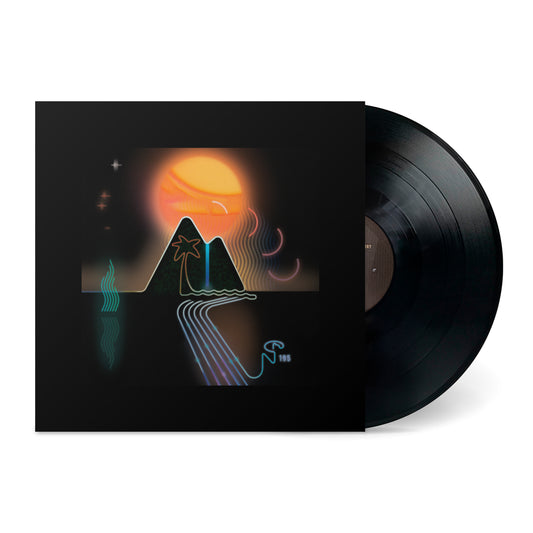
Ages later, these composers continue to populate the playlists on Hearts of Space up through the development of the World Wide Web. Their impression is etched across the calming simplicity of the works within this compilation like a rake across a zen garden. You hear it in the echoes of gamelan that reverberate through the layered zither of Laraaji. Satie-like elegance shimmers in “Music for Gymnastics” by Jordan De La Sierra, who spends his early Seventies sketching yantras and rubbing shoulders with the Grateful Dead in allnight San Francisco cafés. Debussy teaches Madame Suzanne Cargil, who mentors David Naegele, who uses a synthesizer to emulate a temple bell surrounded by forest birds in his “Eternal Sanctuary.”
The line between science and music blurs. Healthcare behemoth Kaiser Permanente places a bulk order for Joanna Brouk’s recordings to use as sound therapy for patients recovering from surgery… Lapsed metalhead Alex Johnson records his ambient opus Operation Oasis, which is wrapped in a yellow ribbon and shipped to American reserve troops as an aural pharmaceutical for PTSD… Master Wilburn Burchette builds his own guitar and records Music Of The Godhead For Supernatural Meditation for his Burchette Brothers label, a mail-order endeavor co-run by his scientist brother, a chemist.
In the neck of his custom guitar, Burchette embeds seashells.
And so this journey ends. And so another begins. You stand on the precipice of another technological leap. Artificial General Intelligence looms. Do not panic. In your hands, you are holding a palliative to your newfound insignificance. This is the sound of optimism born from progress. This is not just soft music. This is software. This is a soft white foam.
-Brent Dicrescenzo, June 2024

Joanna Brouk - The Space Between

Laraaji - Bethlehem
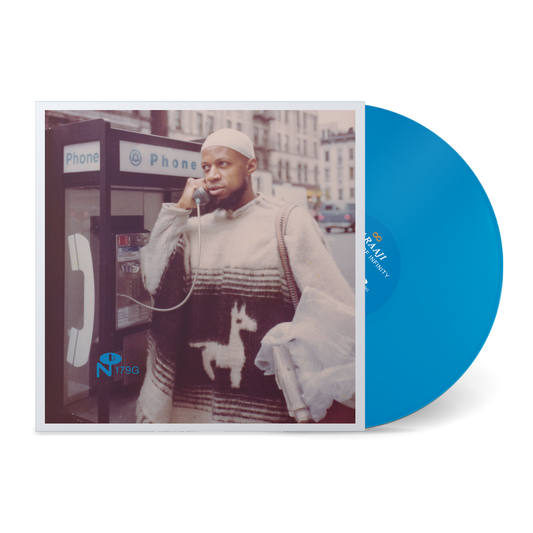
At the source of his music is joy—unfiltered, unrestrained, timeless, and eternal. A cosmic laugh that endures all absurdity. Laraaji, born Edward Larry Gordon in Philadelphia in 1943, had become uniquely open to vibrations within while living in Queens, New York, in the mid-’70s. “I had gotten serious about meditation and diving deep within myself,” he’d explain in 2015, having taken up his contemplative practice after reevaluating his pursuits in the wake of his acting turn in the acerbic 1969 film Putney Swope.
Like Paul on the ancient road to Damascus or Philip K. Dick circa 1974, Gordon lived through a single, epiphanic moment that crystallized his path. For him, revelation came as a “sound vision,” one he described as an “experience of hearing, feeling, and receiving vast, cosmic orchestral sound. [It] may have lasted five or ten minutes…everything in the universe vibrating at the same time, everything in the universe present in the cosmic now.” It delivered both “excruciating beauty” and a peek inside “the void.”
Near the end of the decade, Gordon adopted the name Laraaji, having accepted it as a gift from members of a meditation group centered around Harlem’s Tree of Life bookstore. As a moniker, it referred obliquely to the divine energy of the sun, in specific to the Egyptian solar deity Ra, and in voicing to the “Larry G.” of Gordon’s given name. By then, he’d already traded in his Yamaha guitar for an autoharp, beckoned to do so inside a Queens pawn shop by another startling, commanding, and ethereal voice inside him. Adding electrical amplification, he began playing his instruments on the sidewalks of Brooklyn and busking in Manhattan’s Washington Square Park, usually in lotus position, eyes closed to his surroundings and open to vaster resonances. In 1979, his practice caught the attentions of one Brian Eno, who left a note torn from his journal in Laraaji’s zither case, inviting him to collaborate.
Laraaji’s prodigious recording career found its first footing in 1980’s Ambient 3 (Day of Radiance), the landmark third LP in the series of works that made producer Brian Eno’s name all but synonymous with the genre at large. Across the record’s chiming, evolving 49 minute runtime, Laraaji and Eno refined concepts already set down during the 1978 taping of the autoharpist’s Celestial Vibration. The record’s high profile also applied ample momentum to a discography that delved into decades of new corners, even after 2023’s Segue to Infinity compilation. “Bethlehem (Glimpse)” is drawn from those same 1978 recording sessions, which first saw release as a 1985 cassette. On “Bethlehem,” Laraaji transmuted his Baptist roots through his own visionary sense of “everything being here in the present moment.”
A genuine polymath, Laraaji’s own “cosmic now” would find him involved with the late-‘60s Greenwich Village comedy scene, gigging on Fender Rhodes with a jazz fusion combo called Winds of Change, and creating and performing in the early ‘80s Manhattan Group W public access TV program Celestrana, featuring both comic puppetry and his then-partner vocalist and crystal healer Vina Devi. The vast multiverse of musical outpourings from Laraaji includes 1987’s ethereal Essence/Universe, a pair of mid-’90s progressive ambient albums with Channel Light Vessel alongside Roger Eno and Bill Nelson, and the noise explorations of 2011’s FRKWYS Vol. 8 project with Blues Control. The 2020s have likewise been treated to Laraaji’s boundless cheerfulness via Los Angeles freeform station Dublab’s weekly three-minute laughter meditation Laraaji Laughs.
Everything, he says, is in unending response to that first mystical encounter, which laid bare his mandate to “bring forth a music that would stimulate or awaken a celestial or cosmic communal consciousness, that we’re all here, one, right now.” After all, as he first admitted to earthly listeners back on 1984’s Vision Songs - Vol. I, his best and only response to the wonders of creation, and his place within it, was to “simply bliss out for days and days.”

David Naegele - Eternal Sanctuary
Classically trained pianist and Minnesotan teenager David Naegele hitchhiked to California in the summer of 1968. He had his sights set on Australia, but a prolonged layover in Hawaii led him to the Honolulu Civic Auditorium for a Janis Joplin concert, where he recalled them “burning weed like incense.” Immediately drawn to the laid-back atmosphere, he decided to skip the trip down under and hang loose on the island paradise of O’ahu. “I was a ‘Honolulu Hippie,’ camping on the beach and borrowing people’s floors,” Naegele said. “If I couldn’t find a place to sleep, I’d just walk up and down Kalakaua Avenue—hobnobbing with drunks, military police, and the other yahoos hanging around.” When Naegele’s parents caught wind of his summer of drugs, David begrudgingly accepted a plane ticket back to the Land of 10,000 Lakes to finish his senior year of high school.
Naegele developed a talent for classical piano from a young age, studying at the University of Minnesota when he was just 14 years old. He’d been a top pupil of Madame Suzanne Cargil, who studied under French composer Claude Debussy. Hoping to avoid the draft, David used his piano and french horn skills to enroll in the Naval School of Music, where he played in the base’s concert and jazz bands. “I got myself kicked out by complaining about all the excessive drunken behavior to my superiors,” Naegele explained.
After a stint working at a chemical dependency treatment center in Minnesota, he made his way back to L.A.—renting a room in a flop house on Skid Row and selling plasma for a measly 20 bucks a week. On the brink of desperation, he moved into “Hobart House,” a sprawling Hollywood party house in Los Feliz, where he’d meet neighbor and future collaborator David Storrs. Naegele began taking astrology classes at the Carroll Righter Institute in southern California, where many metaphysical forecasters got their training. It was 1976, the same year in which David caught Dick Sutphen, already a known purveyor of mystical experience, performing the first live past-life regression hypnosis on “The Tomorrow Show,” a late-night NBC program hosted by Tom Snyder. “It was then that I knew I wanted to work with Dick,” Naegele said.
After toiling the summer away harvesting corn for Jolly Green Giant, Naegele packed all his belongings into a Toyota hatchback and set out to attend a Sutphen seminar in Scottsdale, Arizona. Sutphen was then looking for help with his growing publishing company. “I was a computer guy back then, plus Dick’s ears perked up when I told him I was a classically trained pianist,” Naegele said. Sutphen hired him on the spot as on-tour roadie and as musical director for his recently minted Valley of the Sun label. Together, they’d sculpt Sutphen’s vision of “inner harmony music” by manifesting the label’s cosmic in-house group: Upper Astral.
Working closely together, Sutphen and Naegele developed an intimate professional relationship; Naegele even became Dick’s personal astrologer. “I felt I was spiritually at home at Valley of the Sun and a part of Dick’s family,” Naegele said. As for producing the earliest Valley of the Sun releases, Sutphen read aloud the scripts for his guided meditation tapes and Naegele recorded, edited, and transferred them to tape on a manual duplicator, eight at a time. “I didn’t spend too much time on it,” Naegele admitted. “They were simple improvs that I did on a cheap little synth in some guy’s living room. He had a nice tape recorder.”
Feeling self-conscious about this lack of sophistication, Naegele enlisted experimental synthesist David Storrs to elevate the label’s technical and creative sound design. A remarkable symbiosis emerged: Storrs’ voracious, childlike approach elegantly balanced Naegele’s classical piano training—providing early Valley of the Sun releases with a Zen-like atmosphere of patient, gentle restraint, mixed with progressive sci-fi storytelling. Producing under their own names and as Upper Astral, Naegele and Storrs would account for a prodigious 20 releases, culminating in their most well-known and commercially successful cassette, 1982’s Temple In The Forest, which laid the foundation for Valley of the Sun’s rise to commercial success. “Eternal Sanctuary” was drawn from its 22-minute A side, which, according to J-card copy, had been “totally improvised while David was in a meditative state.”
Just a year after Temple’s release, however, Naegele would take a leave of absence from Valley of the Sun, handing creative control over to mailroom shipping clerk Robert Slap in 1983. Staying in Hollywood, he drew on his astrological experience to launch what he claims is one of the first computerized horoscope businesses, all on his Apple IIe computer. He advertised his readings in Sutphen’s quarterly Self-Help Update publication and would return to Valley of the Sun three years later to DJ new age cassettes for a bookstore and help Sutphen with Reincarnationists, Inc.—a formalized, non-profit movement of spiritual self-responsibility. In 1991, Naegele made his final departure from Valley of the Sun and returned to Minneapolis for good. “I must admit,” Naegele said, “that those years in the ’80s working with Dick Sutphen were some of the best years of my life.”

David Casper - Carmel Valley Sunset
Like so much of America’s youth, David Capser was swept up in the blooming psychedelic movement of the late 1960s. He’d come up on on the south side of Chicago in a home heaping with the thousands of records his father had collected, which put touchstones of folk, classical, and jazz close at David’s hand. As a child, he began experimenting with mouth harp, boinging away before accumulating skills on harmonica, guitar, and, eventually, sitar. He’d later set off for Marin County, California, to study the Hindustani lute instrument under Ali Akbar Khan, master of the sarod and a key popularizer of Indian classical music in the Americas. Casper’s experiences with raga’s meditative, contemplative traditions led him ultimately into dialogue with the new age aesthetic.
“That’s what tuned me into playing in a spatial way, without a beat,” he told researcher Erik Kramer. “That’s kind of what I got into—to feel the space of music without the tyranny of a beat… It was the reintroduction of space—space that gives the mind time to think, and to contemplate, and to envision, because you aren’t being moved along at a certain tempo. That’s one of the things that new age music did: It filled a little bit of a void where there wasn’t really very much music that did that.”
In 1980, Casper used the one-off Cool Carrots label to release his own experimental two-song single under the name Cracky. Both “Pack A Punch” and “Coming Home Again” found Casper employing two jew’s harps, a Chinese plucked zither known as a zheng, and lyrics that paired rock ‘n’ roll gibberish with spiritual mantras— all resulting in a sound not entirely distant from contemporary recordings by Red Krayola or Arthur Russell, who was then charting similar negotiations between pop, danceable rhythms, and rigorous spiritual exploration and practice.
Though Casper’s 1981 album Hear and Be Yonder was released only a year later (under a Hummingbird Records imprint unrelated to Joanna Brouk’s Hummingbird Productions), its sonic character might easily be mistaken for the work of an entirely different artist. Over eleven transportive tracks, it island-hops across Easterntinged twang instrumentals, folksy Americana, sitar-laden semigamelan, kalimba jungle jaunts, and a piano/cello duet. The record was “an introduction to the range of musical spaces that I was exploring,” as Casper put it, and just the sort of synergistic world snapshot that later became a hallmark among new age releases. The album’s “Carmel Valley Sunset” returned to jew’s harp, this time in a hushed conversation with crystal glass harmonica, piano whispers, and wind chimes. “I tried to come from the deepest space I could,” Casper said, “and hope that it helps somebody to feel peace or open a door inside their own consciousness.”

Don Slepian - Sea Of Bliss
It wasn’t a mystical revelation that led electronic composer Don Slepian to his long career in new age music: it was technology. Growing up in New Jersey, Slepian found himself drawn to electronics from his earliest age. “I learned how to solder when I was seven and never looked back,” he told Jesse Locke in 2019, for Aquarium Drunkard’s Transmissions podcast.
By the age of ten, Don had built his own synthesizer, with inspiration from Music From Mathematics, a 1961 Bell Telephone Laboratories LP his father brought home—from work, in fact: Bell Labs itself, where he was employed as a researcher. On the cover, a conductor lead a chorus of mainframe units, and track titles included “Improvisations On A Random Piano” and “The Voice Of The Computer.” Once the notion of electronic music got into Don’s head, it was undeletable, long-term storage, hardwired in.
Following his 1971 graduation from high school in Summit, New Jersey, Slepian enrolled at the University of Hawaii to study piano. His O’ahu years would prove pivotal, providing ample space for spiritual growth, inside which he nurtured a growing interest in Hindu cosmology, as well as taking on experiences with synthesized audio and emerging tech. He sold ARP synths in Honolulu at Peter Corragio’s Sinergia studio and ran a test station for ARPANET, the Department of Defense project that evolved into the modern internet. Along the way, Slepian kept busy scoring commercials for the Hawaii Visitors Bureau and serving as musical director of the Honolulu Theater For Youth, staging orchestral performances of music from Star Wars and other family-friendly fare.
In 1978, Slepian’s Electronic Music from the Rainbow Isle cassette appeared, pressed in a run of 450 copies and featuring efforts ranging from the busy Tangerine Dream-isms of “Glimmering” to the haunted spoken word and ghostly swirlings on “Halloween Piece.” Rainbow Isle found its way back to Bell Labs and Dr. Max Mathews, who arranged for Slepian to return to New Jersey and serve as an artist in residence. He’d soon set to work with the new Bell Labs Digital Synthesizer, or Alles Machine, better known as “Alice.”
At the dawn of the 1980s, Tim O’Hanlon and Gary Terrell approached Slepian about recording new ambient music for their Plumeria Records label, with the goal of consciousness-raising in mind. “Sea of Bliss” is drawn from the 1980 album of the same name, a landmark recording that pulled equally from electronic music’s academic roots and Slepian’s own open-hearted spirituality. Plumeria initially pressed 500 copies, a selection of which got airbrushed cover art by Juelle Lumiere. The New Dawn and Open Spaces cassettes would both emerge in 1980 on Plumeria. The label’s final Slepian tape was 1982’s Largos, which featured baroque and classical compositions performed on synthesizers. Slepian kept at it during the decade, releasing several more cassette and LP projects, including Rhythm of Life on Fortuna, Reflections for Audion in 1986, and Audion’s Sonic Perfume compilation in 1987.
“I’ve never been in the new age communities,” Slepian explained, although his musical activities did put him in touch with similar travelers—including California synthesist Steve Roach, who crashed at Slepian’s place while on the road; composer Laurie Spiegel, who logged time on the Alice synth with Slepian; and kosmische/Berlin school pioneer Klaus Schulze, who traveled behind the Iron Curtain, sharing Slepian’s Sea of Bliss with kindred listeners. Perhaps most importantly, though, “Sea of Bliss” was adopted by creator, producer, and host Stephen Hill for his long-running syndicated public radio “space music” program Hearts of Space, dedicated to spreading cosmic sounds via the airwaves since 1973.

Vernal Equinox - Silent Dream - The Real Dream
Like so many electronic music obsessives of the late 1980s, Vernal Equinox’s Steve Brenner and Timothy Rempel instinctually found their way into the retail gear business, working in the keyboard department of Sherwood Music in Kitchener, Ontario. The gig allowed them first crack at some of the Canadian store’s cutting edge acquisitions— including a Yamaha DX7, the Roland Jupiter-8, Roland’s SH-101 and Juno-106, along with “practically every Roland drum machine, the 606, 707, 808, and 909,” not to mention samplers, delays, vocoders, and guitar pedals. Soon enough, they found themselves armed with enough circuitry to begin work at Sync Studios, a facility located conveniently in Brenner’s own basement.
Brenner could already claim credit for three cassettes worth of spacey synth modulations: Signals and Nacht Musik on his own Sync label, and Stellar - Tunnel, made in collaboration with Peter Gulch for his busy Synkronos Music imprint. Released in 1988 on Atomeum Dawn Records, New Found World—Brenner and Rempel’s first and only full collaboration as Vernal Equinox—demonstrated their allegiance to the Berlin School, drawing on the strains of eerie sequencing that had graced John Carpenter film scores and the more affable digitalisms of German duo Cluster. The album’s gauzy wooded landscape cover photography, in contrast, borrowed liberally from the well established Windham Hill practice, a choice inspired by the venerable new age label’s decade and more of proven sales.
That woodsy look no doubt signaled a more relaxed mindstate for listeners going in, although Brenner and Rempel looked several shades more dynamic in the back cover’s glamor shot, clad in denim and posing on a train track. Within the LP’s grooves, tracks like “Le Metro” recalled the European transit imagery of electronic music’s most influential forebears. “New age is all tied to spirituality and religion,” Brenner told Linus Booth. “I wanted none of that with Vernal Equinox. I worshiped Kraftwerk [and] Tangerine Dream.”
Despite their 1988 album’s masterful deployment of textural synth tones, the Vernal Equinox duo were subsequently off to explore even newer worlds. Brenner would use the Atomeum Dawn mark once more, for 1990’s Metropolis, which saw he and Brett Maraldo delving live at Kitchener’s Princess Cinema into industrial rhythms and electrified dance funk. And in 1997, Rempel revived the Vernal Equinox handle with the often darkly ambient Vernal Equinox Book II—Music For Art Galleries, performing a host of duties including synthesizer, piano, keyboards, bass, and both acoustic and electric guitars.

Steven Cooper - Soulmate Suite
Born and raised in L.A.’s San Fernando Valley in 1951, Steven Cooper was a career musician who spent much of his early professional life exploring the nightclub scene. Originally inspired to pursue music after hearing some classmates banging out “Light My Fire” on a bandroom piano, Cooper became a diehard fan of canonical ’60s and ’70s rock. A naturally gifted and versatile talent, Cooper began on the trumpet but quickly expanded his list of proficiencies to include any instrument a working band might need: guitar, drums, bass, keyboards. A self-proclaimed “synthesizer geek,” Cooper was an early adopter of electronic instruments and purchased a MiniMoog in 1973—the first in a series of gear acquisitions that would inform his style thereafter.
Cooper’s early career had essentially no connection to new age. During the mid-’70s, he’d cut his teeth with Shadybrook, a touring group out of L.A., before settling in Houston. In 1983, he scored and appeared in the on-screen band for Showtime’s R-rated Lone Star Bar & Grill series. Flush with cash from gigging and with roots firmly planted on the Gulf Coast, Cooper was finally able to indulge his “pursuit of all the latest technology“ and began building out a dreamy home studio featuring Otari 8-track recorder, E-mu Drumulator, Prophet 5 (serial no. 34), Yamaha CS-80, DX’s 1 & 7, and a RMI Keyboard Computer, among other synthetic pleasures.
Cooper would eventually be drawn into Dick Sutphen’s psychic vortex through printed material. While on tour, he devoured Sutphen’s first book, You Were Born Again To Be Together, and went on to consume other titles from Valley of the Sun Publishing and sign up for Sutphen’s “Self Help Update” newsletter. He attended several Sutphen Seminars where he underwent group hypnosis and even enrolled in the Silva Mind Control program— designed to help you “use your whole mind to shape your future and manifest actual change in your life.”
A Valley of the Sun ad calling for new submissions caught Cooper’s roving eye; eagerly, he immersed himself in a sonic bath of new age music, listening to the likes of Mark Isham, Vangelis, Fripp & Eno, and Tangerine Dream for inspiration. Soon enough, he’d submitted what became the first side of Transcendence, his seminal 1985 Valley of the Sun tape. Floored by the material, Sutphen requested a full album double-quick. A languid, ethereal meditation on expansive synth pads and otherworldly autoharp texture, this first outing saw Cooper break with his own rock roots and head toward what he called “the complete antithesis of pop music.”
Over the next five years, Cooper composed an additional four albums for Valley of the Sun, including the delightfully downtempo baked synth-pop second side of 1986’s Key West Afternoon. Originally commissioned for use in an industrial film, it’s a bubbling 22-minute seaside stroll turned prophetic, its lo-fi synth humidity foretelling the rise of chillwave. Angelic glissandos on 1990’s Soulmate Suite, from which Cooper’s excerpt is drawn, render in airy choral odes the “harmonious union of two perfectly balanced souls.”
New age music was finally penetrating popular culture by the end of the ’80s, with George Winston’s landmark Autumn certified platinum in ‘87 and Ray Lynch’s burbling and popping Deep Breakfast spooning up the sales. Cooper, flush with royalty cash, was ready to transcend Valley of the Sun. “I didn’t want my music to only be released on cassette forever,” he said. Planet Earth, a sonic history of our planet “from atoms to volcanoes to earthquakes to insects to dinosaurs and eventually human beings,” had been optioned by Passport Records’ sub-label Audion Recording—who promised Cooper a CD debut. Unfortunately, history lost the never-released record, as Audion folded under financial strain in 1989. As his royalty returns faded, Cooper relocated to Nashville in hopes of finding more promising musical ventures. There, he composed material for motivational cassettes on Jonathan Parker’s Gateways Institute label and used his remaining funds to launch the Songwriters Studio. In that venture, Cooper found an untapped niche producing demo tracks for aspiring artists; he’d prove supremely prolific between 1990 and 2012, cutting approximately 12,000 songs.

Peter Davison - Control
As a young father and new husband, Santa Monica-based composer Peter Davison put a call out to the Divine: “I used to pray to the universe that I could make writing music my day job,” Davison remembered. “I said, ‘I’m not going to be picky about the style. I just love to write music, and that’s all I want to do with my time on earth.’”
Born in 1948, Davison lived a life defined by music from the outset. His parents “trained” him musically, handing him flute and recorder before delivering him to first grade classes. He’d moved on to the orchestra by third grade, and into dabblings with popular guitar music during his teens. By 1973, as a graduate student, he had composed his own 14-minute avant garde orchestral piece, his studies at California State University, Northridge, having opened his ears to groundbreaking work by the leading lights of 20thcentury orchestral composition: Stravinsky, Berg, Varese, and others. Southern California climes also positioned Peter well for work in scoring for film and television, including a 1984 episode of Shelley Duvall’s Faerie Tale Theatre. “Happily, I was able to just make that be my life’s work,” he said of one professional track he’d still be on nearly four decades later.
After years of compositional exertion in the burgeoning “modern classical,” atonal field, the discordant grind of the music began to distance Davison from his own playing. “It began to feel formulaic,” he recalled. “I’m not saying it’s not great music, I’m just saying that for me, it just started to feel like, do I want to do this? Music’s supposed to be this wonderful, beautiful thing that takes you to places where you’re feeling wonderful with the universe and you’re you.”
Davison’s orientation toward natural beauty drew him to French composer and ornithologist Olivier Messiaen, whose compositions employed rhythms picked up from birdsong; Messiaen’s Eastern influences in turn introduced Davison to the sounds of Japanese and Balinese music. At the confluence of the ‘70s and ‘80s, Davison’s commission scoring commercials for two separate western wear retailers put enough cash in his pocket for a sixweek trip to Bali, where he did “nothing but study and listen to music,” whilst psilocybin mushroom omelets ushered him into psychotropic oneness with the local vegetation.
Upon returning home to Santa Monica, Davison chanced upon a tent happening staged just off Santa Monica pier by Vedic mystic teacher Swami Mukundananda. Inspired, he’d release both cassettes and LPs of his Selamat Siang in 1980, with its saxladen and Vangelis-adjacent title track, on his own Avocado label, named after a thriving tree in Davison’s own Santa Monica yard. It marked the first of several early-’80s Avocado offerings, including the Star Gazer and Forest tapes in 1982, the period from which the previously unreleased “Control” was culled.
But the exquisite Avocado era proved to be simply a seedling for Davison. Over the subsequent 40 years, he’d nurture a sprawling orchard teeming with dozens of new age staples, including extensive works for the Gaiam yoga brand; his Adagio series, intended for calming applications ranging from meditation to tai chi; and a long-running series of CDs made for his Davisounds label, with titles like Clarity Rising and Enchanted Lagoon accumulating deep into the 2020s. Peter Davison’s “day job” would indeed take listeners across the globe to all manner of blissful, mindful destinations.

David Storrs - Night In The Vortex
David Storrs’ childhood education at the experimental Midtown School in Los Angeles was imbued with a sense of total freedom and encouragement to “just go for it”—whatever “it” was. Midtown was a collaboration between innovative, mid-century architect John Lautner and forward-thinking industrialist Kenneth Reiner, who was dissatisfied with the era’s lack of progressive educational options. “It was pretty different in terms of the lesson plans,” Storrs recalled. “Students were responsible for what they wanted to learn and the rate at which they wanted to learn it.” From working on car engines at the age of seven to music mentoring from famed Wrecking Crew session bassist Lyle Ritz—these experiences would seamlessly dovetail with the creative and aesthetic license Dick Sutphen later afforded to Storrs in his work for Valley of the Sun.
An early interest in engineering led Storrs to L.A. City College, where he studied optical electronic engineering. Deeply interested in music, he pushed past institutional roadblocks and eventually enrolled in an electronic music composition course on a pass/fail basis. Since he wasn’t being graded on his compositions, Storrs shot for the moon; his Stockhausen-inspired electronic creations compelled theater students to engage him to score their more experimental stage projects, in addition to providing lighting effects. A self-proclaimed psychoacoustic nut and true experimentalist, Storrs was fascinated with the texture of sound. “When I was a child, my parents had a phonograph and I would sit in front of the speaker and just zone out,” Storrs said. This inclination toward the contemplative potential for sonic material was useful in his approach to new age music. “I really understood…the therapeutic nature of atmospheric music,” he said. “How it worked into meditation and facilitated people drifting out into their own psyche.”
In aiming to embody the message of Dick Sutphen’s progressive psychic research, Storrs and David Naegele pushed at the boundaries of the nascent new age scene, driving one another toward fresh textures and styles that would become doctrinal to the genre. “One of the things that makes a performance appealing is the sort of innocent nature of making a practical mistake,” Storrs said of their unpolished, slapdash approach. “There is a subliminal accessibility that is attractive to people—we believed in what we were doing and we played it with confidence.”
Storrs’ imaginative spark combined with his command of recording equipment and digital instruments were key factors. Acting as a de facto producer for Naegele, Storrs synthesized Naegele’s impressionistic concepts and tone choices into cohesive compositions, making it difficult to tell where Naegele’s influence ends and Storrs’ begins. “At the time, we didn’t really care about who got credit for anything,” Storrs reflected. “We were all broke, making music, and having fun.”
In the same breath, Storrs brought his fearless pursuit of exploration and technological mastery to another musical movement bubbling up on the West Coast: hip-hop. While working on disco tracks by The Glass Family for Jim Callon’s JDC Records, Storrs checked out a small club across the street from MacArthur Park called Radioclub. There, he saw DJs scratching for the first time. “I was mesmerized by these guys,” Storrs recalled. “It was art music!” Soon after, Storrs expanded his studio to include the necessary tools of the trade: the Roland 808 and 303 drum machines.
In 1984, he was approached by pioneering DJ Chris “The Glove” Taylor to work on the soundtrack for the film Breakin’. In one marathon 18-hour session, the duo cut together the underscore for the film, culminating in a vocal, instrumental, and dub version of the song “Reckless.” The single featured rising hip-hop star Ice-T and the smash Breakin’ soundtrack reached multi-platinum status in short order. “We decided to slam the thing as hard as we could and just let it fly,” Storrs said. “Itchiban Scratch,” the duo’s follow-up single for Electrobeat Records, echoed the evolving, arpeggiated synths on Valley of the Sun’s 1984 cassette Channel For The Light.
Storrs had a hand in many more hip-hop, disco, Hi NRG, and electro singles, including flamboyant disco vocalist Sylvester’s Megatone-issued track “Taking Love Into My Own Hands” and 1985’s “Mysterious Waves” for L.A. electro group Kosmic Light Force. “I was always working with different people…doing remixes for major labels, soundtracks, and other commercial projects,” Storrs said. “I’d take DJs into the studio and we’d make tracks all day and night—sampling everything we could get our hands on and just experimenting.”
“Night in the Vortex” is drawn from the flipside of Storrs’ altogether warmer and more contemplative 1985 cassette Sedona Sunrise. Over a nocturnal drone symphony of chirping crickets, Storrs paints vivid washes of pink and purple tonality that evoke the swirling mystical energies and alien landscapes of a Sedona vortex—the Arizona red rock formations denoted by the track’s title. Storrs would return to alien sounds, albeit of a more malevolent nature, with his hackles-raising music for Tobe Hopper’s 1986 sci-fi horror film Invaders from Mars.

Iasos - The Angels Of Comfort
In 1989, New Hampshire professor of Developmental Psychology Dr. Joel D. Funk polled his patients on dozens of recordings, attempting to determine what music people heard while adrift in near-death’s liminal, intermediary state. Funk’s research would consistently point to one recording: “The Angels of Comfort.” Nearly 30 minutes long, and composed, it now seemed, as the very overture to the infinite, the track had first appeared in 1978 as the A-side to Angelic Music, the second album by a musician known as Iasos.
Born Joseph Bernardot in 1947 in Alexandroupolis, Greece, Iasos emigrated with his family to New York City at four. Music had always made sense to the boy; he took up the study of piano and flute, diving in with relish and continuing to teach himself even after his lessons formally ended. Years later, at Cornell University, he founded the Nova Shadow Quartet. “We played all kinds of things: a little jazz, a tiny bit of rock, many ballads—but mostly bossa nova,” he said. It was during his Nova Shadow tenure that Iasos first noticed the heavenly music filtering persistently into his consciousness, filling his head with harmonious sound. “It felt like someone was intentionally playing a radio station in my head,” he recalled. He’d come to call it “paradise music,” an enigmatic delivery of “heavenly music that exists on higher dimensions.”
In 1968, as the counterculture exploded with psychedelic drugs and acid rock, Iasos headed toward the heart of the happening— first to Berkeley, California, and then to Sausalito in Marin County, just north of the Golden Gate Bridge. For $200, Iasos bought a houseboat, the smallest in town, and hooked it up to the local plumbing and electric grid. He gave flute lessons to earn money, mostly starving while forming ensembles he hoped could perform compositions based on the “paradise music” only he was hearing. Several rock bands coalesced and crumbled around him, unable to match the ecstatic sounds he sought. Iasos acquired a fourtrack recorder and began experimenting with tape effects and electronic processing on flute, piano, and slide guitar. He reversed his tapes, played them backwards at double-speed, or half-speed, laid on reverb—anything to approximate those continuous cloudlike soundscapes. The early 1970s clicked by while Iasos refined, grew out his beard, and delved ever deeper down the well of experimentation.
In 1975, Unity Records of nearby Corte Madera released Inter-Dimensional Music, Iasos’s debut LP, as UR-700. Only later would the record take its place as a new age landmark, alongside close friend Steven Halpern’s first album, released just a month earlier. “My flute playing was on his record, Spectrum Suite.
I was on both albums,” Iasos said. When a friend’s rock band got ahold of an ARP String Ensemble, a fully polyphonic multi-orchestral synthesizer, they invited Iasos to record with it, blissfully unaware that he would use it as a tool for touching the afterlife. Listening to his new improvised recordings at home, Iasos quickly realized that he’d made what felt like a composed piece of music, far more interesting than he’d anticipated. “That became ‘The Angels of Comfort,’ one of my most popular pieces,” he said. “It has extremely universal appeal—mothers play it when they’re giving birth, all kinds of people use that music.”
The Angelic Music album’s title had been no fluke. During a session of subconscious automatic writing, an ineffable truth was suddenly revealed to Iasos: Vista, the mysterious source of the music he’d been receiving for so long. “I suddenly remembered Vista from before I was born,” he said. “Vista was the being all this time, transmitting these musical ideas into my mind.” Some of Iasos’s subsequent Vista-delivered music would be accompanied by moving images. He acquired night access to a video studio, provided by a devoted fan who was convinced that Iasos could do with video what he’d done for synthesizers. The visual equivalent of his swirling soundclouds, Crystal Vista, named after two distinct Iasos muses, was released as a 1981 LaserDisc.
The balance of the 1980s, and the oncoming three decades and more, would witness Iasos’s further transcription of those same paradisal chords he’d been pursuing since the days of Nova Shadow. On January 6, 2024, Iasos passed at the age of 76, leaving behind a vast tapestry of sound explorations, including both a constellation of recordings on his own Inter-Dimensional Music label and 2013’s panoramic Celestial Soul Music compilation, a generous wealth of sonic gateways to higher dimensions of light and love, of souls in alignment with eternal light.

Robert Slap & Suzanne Ghiglia
As a 15-year-old Detroiter, Robert Slap enjoyed a brief stint in the limelight with one-hit wonder garage rock outfit The Tidal Waves in 1966. After playing alongside the MC5, Bob Seger and the Last Heard, and The Animals, he’d spend his next 15 years bouncing back and forth between Michigan and California—gigging with various rock and R&B groups before putting roots down in Malibu. “I was fresh out of the exhausting night club scene,” Slap said. “I didn’t want to wind up turning into some old guy playing in a blues bar. I wanted to push through the barriers to see what was on the other side.” His probings beyond bar rock eventually found him answering an ad for a job with Dick Sutphen’s Valley of the Sun label.
Slap had previously come across one of Dick’s self-help programming tapes through the Whole Earth Catalog in 1978. After attending a hypnosis lecture with his girlfriend, Slap selected a cassette from the merch table to help him with performance anxiety. In the summer of 1980, Valley of the Sun was expanding and spreading its audio wings, poised to move away from psychic enhancement and directed hypnosis.
Hired on to help with mail order operations, Slap would oversee distribution of Sutphen’s Master of Life magazine from their Malibu warehouse. He’d be promoted to musical director within a year of his involvement with Valley of the Sun, when his predecessor, David Naegele, left the helm. Slap was then tasked with bringing a completely different perspective to the label, in hopes of capturing the attention of a whole new audience.
When Sutphen laid out the cash in 1985 for a Valley of the Sun recording studio in Malibu, Slap’s creative spark was stoked. “Crystals were interesting but I never consciously said I was a new age musician,” Slap said. “A lot of that early stuff was boring. I wanted to create something I could leave as my legacy.” With a dedicated space to create, Slap worked around the clock on new titles. In 1986, he released Sedona: The Psychic Vortex Experience, a pinnacle among Valley of the Sun offerings. To convey the Valley of the Sun as a literal place, Slap pushed beyond the confines of the new age genre to arrive at more of a cinematic experience, as if Ennio Morricone were scoring a spaghetti western in space.
The second half of the 1980s were dotted by Slap releases, including 1986’s New Age Gregorian Chants and Atlantis: Crystal Chamber, 1987’s evocatively titled Ascension To The All That Is, and 1988’s Shared Blessings. “Ocean Echoes” closed Side A of Shared Blessings, featuring selections from Slap’s collaboration with Suzanne Ghiglia, whose flute talents had been paired with tranquil flower, river, sea, and koi pond imagery in a mid-’80s VHS offering entitled Escape to Nature’s Beauty. She’d composed and performed for the program alongside Bray Ghiglia, another Slap collaborator whose Lunar Goddess album was released by Valley of the Sun in 1994.
Search For Utopia marked a second release credited to Slap in 1988. Described on the J-card as “a New Age musical epic,” Search made it evident that Slap and Sutphen were now imagining their releases as cinematic soundtracks. For Slap, this impulse found its fullest expression on 1990’s Drive, featuring eleven discrete tracks ranging from digital smooth jazz to frenzied, uptempo synth-pop. He’d use Drive as a creative resume to facilitate his entry into the world of scoring for film, TV, and advertisements, landing jobs composing for Leeza Gibbons, The Playboy Channel, and other similar adult-oriented platforms.
Slap parted ways with Valley of the Sun in 1992 and relocated to Michigan City, Indiana, where he turned his focus to studio work, producing for GMP Music Library’s collection of recordings for film and TV licensing. But as the decade wore on, Slap chose to step away from music, staying there until changing tides in the business brought him back. He’d reunite musically with Bray Ghiglia circa 2017, and take an active role as reissue campaigns around his expansive body of work began to percolate out of the ether around him.

Upper Astral - Crystal Cave (Back To Atlantis)
If Dick Sutphen’s Valley of the Sun label had what might be considered a house band, it must have been Upper Astral. In truth an assemblage of efforts by David Storrs, David Naegele, and Robert Slap, the label’s top producers throughout the 1980s, Upper Astral and its J-cards commonly left it up to the reader’s imagination who exactly was generating the sounds on the tapes themselves. Storrs, Naegele, and Slap worked in league with each other, crafting the recordings in response to prompts from Sutphen, a man whose mastery of hypnotherapy and past-life visions was the propeller behind his mini-media empire.
“At the time we didn’t really care about who got credit for anything,” Storrs explained in the liner notes to the 2022 Valley of the Sun compilation. “It was about the excitement and flexibility in an open, undefined field of music that had no rules. We were all broke, making music, and having fun.”
“Crystal Cave (Back to Atlantis)” is drawn from the side-long title track of Upper Astral’s 1982 cassette, which Sutphen envisioned as a “sustained harmonious environment,” which would generate “a high vibrational atmosphere conducive to an altered state of consciousness”—just as its arcane J-card copy said it would.
Subsequent sojourns on Valley of the Sun cassettes would put listeners in touch with Sutphen’s channelings of such storied authentic locales as ancient Egypt and Teotihuacan, as well as further mythical continents like Lemuria, a fictional place popularized for the new age set by both pulp fiction’s pages and Theosophist Madame H. P. Blavatsky. In the capable hands of Storrs, Naegele, and Slap, twinkling Atlantean geode caves shimmer into existence somewhere between the listener’s cochlear nerve and deep space, the kind of trick Upper Astral kept on committing to cassette after cassette, some sixteen more times before decade’s end.

Alex Johnson - Music For Earth Orbit
Amplified suggestions of therapeutic self-help utility have always had their role in the new age sales pitch. It’s a genre of respite and restoration, a software most commonly programmed to calm, to focus, to replenish—as a tool for “tuning the human instrument,” as genre pathfinder Steven Halpern had it as early as 1978. To paraphrase Numero producer Douglas Mcgowan: If new age is healing music, and it is, then this means there are things, and people, in need of healing.
In 1991, composer Alex Johnson sent rations of that healing overseas, distributing the entire dubbed run of his 42-minute Operation Oasis cassette to American soldiers deployed in Kuwait and Iraq as part of Operation Desert Storm. As Johnson put it: “I am almost always against our military policy, but I am always in support of our troops, because they are regular people”—people, more precisely, in acute need of tonal refuge.
For Operation Oasis, Johnson drew on his earlier ambient cassettes releases Traffic Jam Suite and Drive 55, both designed to alleviate the stresses of American roadway congestion. Weightless serenity over sand-scoured expanses, especially on “Music For Earth Orbit,” ties Johnson’s missive as much to the ravaged oil fields of Werner Herzog’s Lessons of Darkness documentary as to the Eno/Lanois space music of 1983’s Apollo: Atmospheres and Soundtracks LP. Johnson’s ambient opus features violin, fuzz bass, and an ARP 2600 synth, conjuring a cinematic grandeur that might hint ever so narrowly at its composer’s fervent love of Metallica’s pre-Black Album output.
According to Johnson, his Operation Oasis reached its recipients wrapped in traditional yellow ribbon, a potent gesture of symbolic audio life support for the serviceperson, doctor, engineer, or cook faced with the brutal circumstances of conflict.

Georges Boutz - After The Storm
Georges Boutz was born in 1945 in Paris, to a family that surrounded him with an array of global musics: classical, Russian, flamenco, and more. “We always had a radio on in the house, everything from Django Reinhardt to Mozart, Beethoven to Elvis Presley,” Boutz recalled. By the age of 10, Boutz was drilling himself on guitar and banjo along with his family’s record collection. At 13, he’d find himself uprooted and transplanted to San Francisco, just in time to spend his teenage years immersing himself in blues music and picking up gigs with local rock bands.
As a guitarist, Boutz was more than competent: On one San Francisco club date, his trio opened for Texas country blues guitar legend Lightnin’ Hopkins, who recruited the band to back him up onstage for a whole run of shows. “The guy couldn’t keep time to save his life,” Boutz laughed. “He kept looking back at us, giving us dirty looks, accusing us of being off the beat because he was off the beat.”
As revolutionary tides swept the Bay Area in the late 1960s, Boutz decamped for Los Angeles. “It was a good music scene in San Francisco,” he admitted, “but then the flower children invaded the place and the drugs started flowing. It was all panhandling and homeless kids—it became kind of trendy, and I could never relate to that kind of stuff. So we got out.”
Circa 1980, Boutz’s work as a limo driver put him in touch with the future of synthetically manipulated music, when he was hired to chauffeur German electronic trio Tangerine Dream to a Santa Monica Civic Auditorium gig. Taking in the show from the side of the stage, Boutz was awestruck by the sounds the band generated, as well as the titanic knob- and oscillator-studded rigs that Edgar Froese, Christopher Franke, and Peter Baumann brought along on tour. “I’ve always been a computer kind of guy,” Boutz said. “My father was a pilot, too, so I was fascinated by the blinking lights and switches.”
Radically inspired, Boutz set about acquiring synths of his own, teaming with friends to share access to a Micromoog, a Crumar Orchestrator, a Sequential Circuits Pro One, and an Oberheim OB8, a very serious investment piece carrying an intimidating price tag in the mid-four figures. Recording live to a Tascam four-track, Boutz drew on themes of aviation for his pair of self-released cassettes: 1983’s Amber 7 referred to the “A-7” nomenclature of a federal airway route, with aircraft instrumentation and coordinates for Bermuda’s airport on the cover, and track titles that describe a nocturnal flight path; and 1984’s Silver Eagle, which shared its name with a line of Cessna planes and featured the feather-light tones of “After the Storm,” a sort of aeronautic come-down composition.
While Brian Eno’s genre-defining Music for Airports provided sonic furniture suited to the terminals and turnstiles of a busy modern facility, both Boutz and his father worked actual flights together— the elder in the pilot’s seat and Boutz in the cabin crew, bringing a sense of calm to the technical necessities of air travel.

Dervish - Somebodies
Beneath its details about Boston art-punk quartet The Molls, 1979’s “White Stains” 7” listed drummer Peter Prescott, later a member of the seminal Mission of Burma. For the four actual Molls, it credited Jon Coe on pianos and Rob Davis on lead guitar, as well as a notentirely-discernible ARP 2600 for Doris Wishman-superfan B-side “Is Chesty Dead?”. Davis and Coe would later form Someone and the Somebodies, among the Boston mutant-pop underground’s most promising bands. Fresh off their series of shows opening for U2 and signed to Modern Method Records, a punky label offshoot of New England’s Newbury Comics chain, the Somebodies feel nowadays like an East Coast parallel to Devo, right down to their cover of Lee Dorsey’s “Working in a Coal Mine.”
Meanwhile, Davis and Coe were digging into very different worlds of sound. “John and I were fans of Terry Riley, Philip Glass, Steve Reich, that sort of thing,” Davis explained. Inspired by minimalist composers on record and by Robert Fripp and Brian Eno’s pioneering glambient outings, they paired up to explore loops and synthetics as Dervish.
Armed with guitar, Farfisa organ, a long chain of effects pedals, and an Echoplex, they began performing around town, playing offnights at local clubs. Soon, they brought in local synthesist Jeff Block to expand their sound, resulting in 1985’s self-titled Dervish cassette. Replete with an Irwin Schmidt reference as an opening track (“Alpha 77,” named after the Can keyboardist’s custom-built effects processor for Farfisa), the album evokes a wide range of the influences they absorbed from the Can, Neu!, and Kraftwerk LPs they sourced from New England Music City, the record store where Coe worked.
“Somebodies” kicks off the tape, distinguishing itself with its layered blankets of guitar, glistening keys, and looped synth bass line. Named in an obvious fit of self-reference, the track is an instance of even further cross-pollination: Someone and the Somebodies’ 1985 album 16 concludes with “Dervish,” a reconstituted version of “Somebodies.” “There was always something in between the ether with those projects,” Coe said. “That particular tune is almost like a synergistic in-joke between the two bands.”

Peter Nothnagle - New Snow
Born in Missoula, Montana, and raised in Iowa City, Iowa, Peter Nothnagle was drawn to music in his formative youth, focusing his scholarly intentions on early music, electronic composition, and the violin. Wigged out by records like Wendy Carlos’s watershed 1968 Moog masterpiece Switched-On Bach, Nothnagle sensed the future was arriving in fuller effect with each passing day. Inspired, he set about tinkering with all the electronic gear he could find.
By the fall of 1978, he’d moved to Eugene, Oregon, then a 100,000-resident-strong home to both the University of Oregon and Lane Community College, where Nothnagle would later offer a class on electronic music. In Eugene, Nothnagle became involved with a nascent group of electronic musicmakers, joining visual artist Nathan Griffith, punk guitarist Carl Juarez, music student Phyllyp Vernacular, occult poet Derryl Parsons, and guitarist Peter Thomas in establishing the Eugene Electronic Music Collective in 1984. Patching together their varied backgrounds and pooling resources toward a set of vastly divergent artistic aims, the EEMC output a clutch of cassette releases across the heart of the ‘80s, including Free Fall: A Compilation Of Eugene Electronic Music, from which “New Snow” derives. The group’s sprawling work-product, ranging from Suse Millemann’s modulated Kate Bush-isms to burbling primitivisms by Michael Chocholak, was encapsulated on 2018’s Switched-On Eugene compilation.
Magisterial and sweeping, “New Snow” moves with slow grace, echoing the breathy beauty of seminal work by Steve Roach and Brian Eno alike. “I think that if there’s one key thing that has inspired me in life, it is uncovering that which is hidden,” Nothnagle told former Oregonian Douglas Mcgowan. “It’s the thread that unites my interest in performing and recording early music, as well as my non-professional pursuits of religious studies, cryptography, memories of World War II submariners, and archaeology.” For Nothnagle, the landscape of sound remains a similarly undiscovered continent. “Even electronic music can be seen as a way of exploring dark recesses and bringing unexpected discoveries to light,” he said.

Jordan De La Sierra - Music For Gymnastics
Jordan De La Sierra, born Jordan Stenberg in 1947, was raised in the foothills of central California, a stone’s throw from the rugged majesty of Yosemite National Park. Church hymnals wrought indelible influences on the boy, who’d later call acapella music from the early church the “constellation of my sonic beacons.” In his teens, he’d record with a pop combo for Hollywood’s Joli label circa 1965, and later earn a full scholarship to the San Francisco Conservatory of Music, where he studied theory, composition, and voice and performed the New Music works of John Cage and Robert Ashley. Near the close of the ‘70s, De La Sierra met pioneering minimalist composer Terry Riley while auditing post-graduate courses at Mills College. Both he and Riley would be mentored by master Indian classical vocalist Pandit Pran Nath. “The music that I studied with Terry and Pran Nath [was] what I would call ‘pure sound with shape,’” De La Sierra explained to Red Bull Music Academy’s Mike Powell in 2015. An early meditational song of De La Sierra’s would be performed on free-form Berkeley radio station KFPA in 1972; a few years later, he’d set down a work-in-progress for Music From the Hearts of Space radio show host Stephen Hill in a KFPA studio.
Over several intervening years, De La Sierra conceived Gymnosphere: Song of the Rose—what became his 103-minute 1977 double-LP debut—as a showcase for his cascading, rhapsodic piano figures. The monumental four-part piece was played—“during the second and third quarters of the night,” according to album notation—on a Steinway D concert grand, captured first in a small Berkeley studio, and then during sessions at 1750 Arch Street’s non-profit basement studio. Final touches would be achieved in November of 1976 in the musically storied and acoustically blessed Grace Cathedral on San Francisco’s Nob Hill, where playback reverberations made by the original studio recordings sounding off the sanctuary walls were mixed with tape-delay echo, resulting in the final product’s sublime, transportive resonances.
Landing on a label that understood the scope of his vision proved difficult for De La Sierra, who eventually signed on with Peter Georgi at Unity Records. The label that had already issued Iasos’s 1975 opus Inter-Dimensional Music would offer Gymnosphere: Song of the Rose complete with a 20-page book of Jordan’s India-inspired drawings and musings on the “tableau of space.” In 1978, a cost-conscious single-disc edition was also sent to market by Unity. De La Sierra, however, turned his restless creative attentions, in rather short order, to poetry and lyrical songcraft. In 1988, he released an album’s worth of abstract synthesized pop rock: the Teja Bell-produced Valentine Eleven for Global Pacific. Its follow-up recordings remain unreleased. Jordan De La Sierra would return, in time, to the San Joaquin Valley, leaving his towering vibrational masterpiece time to, as he put it, “come into natural alignment in the all-pervasive space found interpenetrating the material planes of life.”

Master Wilburn Burchette - Eternal Light
“Amazing, new, deep-sensuous music for psychic exploration… Works like a crystal ball…Especially suitable for probing divine awareness, biofeedback studies, exploring alternative dimensions of consciousness…”
Although southern California mail-order mystic Master Wilburn Burchette was notoriously reclusive, even grouchy, about his selfrecorded music and esoteric practices, he knew all along precisely the most enticing words to apply to it—in advertising copy, if nowhere else. What relative successes Burchette’s work did achieve in its era owed a debt to his beguiling print ads placed in Aquarian publications like Fate Magazine, Beyond Reality, and Gnostica News.
Burchette’s seven-LP output, saturated in psychedelia-sotted improvisational guitar and otherworldly electronic soundscapes, were festooned with their creator’s visionary artworks—naively rendered god-figures, intricate pen-and-ink wave-flanked mandalas, eyeballs graphically embodied or aflame. They were released primarily by Burchette with his brother, Kenneth, via their Burchette Brothers label between 1971 and 1977, before Burchette “decided that we had to quit.” So, while his brother became a psychic, Wilburn, as he succinctly put it, “did something else.”
A native Kentuckian and a San Diegan since the age of 10, Burchette had been fascinated by the occult from a young age. He’d pore over Tibetan mysticism, leading him to approach his musical practice as a way of inducing new states of transcendent consciousness. “The occult side of music is very fascinating and very engrossing and it’s pretty much true,” Burchette said. “You can attack it without being overtaken by it. You don’t have to be a believer.” The shimmering voltaic washes and melodic rustlings of “Eternal Light” are drawn from 1975’s Music Of The Godhead For Supernatural Meditation, a recording designed to be listened to, in Burchette’s own words, “with as much volume as you find comfortable, the more volume the better.”
Near the conclusion of the Numero Group’s ongoing, decade-long Burchette reissue project, Wilburn Burchette and his brother Kenneth, aged 84 and 76 respectively, were found dead in their home in El Cajon, California, in July of 2023. Although Burchette had years prior admitted to avoiding public declarations about his output, inclined as he was to “preserve the mystery,” a lone interview given to Matthew Simonson in July of 2018 reveals the Master as a cosmic trickster, a cantankerous critic of modern life’s absurdities, and a strange, visionary musical enigma. He also enjoyed Star Wars—and honestly, who can blame him? “There’s weird things happening and people avoid weird accidents all the time,” Burchette said. “They have a hunch and hunches are great. That’s being a witch, doing things that would be considered magical because there’s no explanation of it yet.”