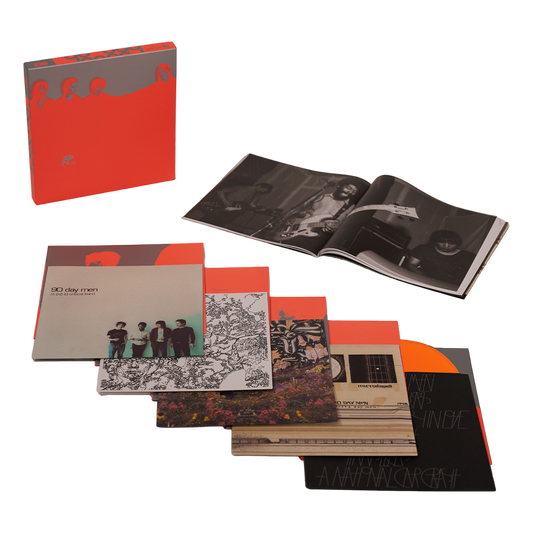
Post-rock emerged in an era retroactively plagued by and in defiance of its own many musical prefixes and afterthoughts, where genres could be insults as much as categorical devices, and tribal tensions ran high in the rock sphere. And while you could toss around a thousand and one “post-somethings” to get the picture, you’ll never get it quite right. That being said, the general consensus associates the “Post-Rock” method with non-conventional song structures, atypical instrumentation to match, and a pervasive attention to dynamics and atmosphere. The “official” coining of the genre can be traced to a review of Bark Psychosis’ 1994 album Hex. While journalist Simon Reynolds would come to explain his usage of the term as a reference to music that utilizes “rock instrumentation for non-rock purposes," there’s little to explain what exactly those purposes are. Though we like to pride ourselves on being music nerds and historians over at Numero, the full history of post-rock remains somewhat elusive and subjective, still ruthlessly tough to define 30 years later.
Here’s what we do know: at some point, and in certain corners, what was left of rock traded poppy hooks for more angular, hypnotic guitar melodies. Immediacy waned, introspection and patience became the language, musicians embraced restraint while allowing experimentation to unfold slowly, expanding upon one singular idea until it reached a natural conclusion. The traditional verse-chorus structure was thrown out the window, minimalism intervened, and the nature of the vehicle was unalterably changed.
So when did rock die and post-rock step into the light? Do both exist simultaneously? It’s unlikely that anyone will ever be able to get to the bottom of that, but we think that maybe sometime towards the end of the 1980s a shared shift in feeling necessitated more intuitive forms of “rock” songwriting. Maybe rock heat-death supernova’d into a wealth of other influences--jazz, krautrock, electronica, punk, contemporary classical music. Maybe it just turned slightly inward from the onstage theatrics, towards the self, in an effort to prove rock’s more essential power could command first through refrain, rumination, and a sense of true landscape.
Look no further than the records below. Or, stream playlists Tiger Style Guide to Post-Rock and Now on Numero: 90s Essentials for a deeper plunge.

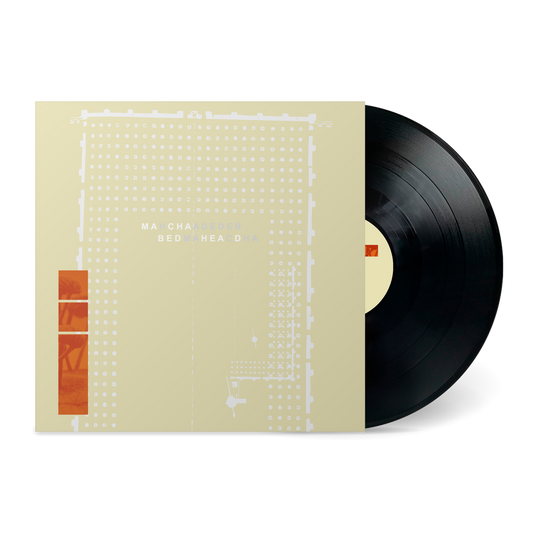
Macha, Bedhead - Macha Loved Bedhead
There’s probably something to say about brothers making music together, but there’s even more to say about two pairs of brothers who were childhood friends reconnecting to make music together after one chapter had closed and the possibility for new projects was endless. After Bedhead, the slowcore project of Matt and Bubba Kadane was put to rest as their last few notes rang over “but this year I think I’d rather be a relic than part of the present,” the two brothers reunited with Josh and Mischo McKay of neo-psych band Macha, to make a five-song EP that feels as dreamy as it is haunting. True to Bedhead’s ethos about writing of life’s compromises while refusing to compromise their art, the project developed slowly over months as the brothers sent tape snippets back and forth, eventually stitching them all together to make Macha Loved Bedhead - Bedhead Loved Macha. The EP was the result of Bedhead’s classic measured melancholy weaved over Macha’s textural and experimental guidance, that perfectly blurred the intentions and natural instincts of both bands. The project ends on an oddly comforting and minimalistic cover of Cher’s “Believe.” In an interview on Aesthetics for Birds, Matt Kadane later explained, the song shed irony when its lyrics were shifted into the past tense, with early auto-tuning lending a sense of desperation that now feels time-capsuled. The project stands as proof that rekindled friendships can unlock creative paths that might never surface otherwise.
Spotify / Apple Music / YouTube / Vinyl

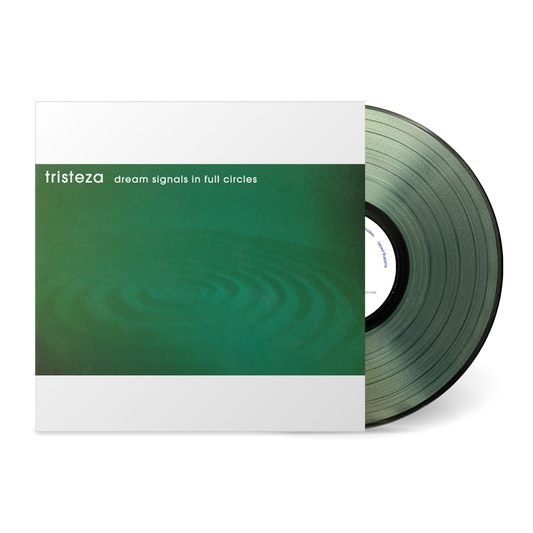
Tristeza - Dream Signals In Full Circles
When combining the past musical inclinations of members of The Crimson Curse, Swing Kids, Mainspring, Constantine Sankathi, and The Locust, one wouldn’t expect the resulting sound to evoke scenes of quiet evenings by candlelight and wistful seaside serenity. However, Tristeza’s patient waves of dynamic and melodically complex guitar interlocution offered some of the most potently chill instrumentals to exhale from the blown-out amplifiers of San Diego’s previous decade of chaotic hardcore. Dream Signals In Full Circles, the band’s second album, drifts freely through vaporous passages of guitar and synthesizer, an aimless and wandering wisp if not for the supreme technical lock between all players. Quiet, contemplative dream scenes for the SoCal screamo burnout.
Spotify / Apple Music / YouTube / Vinyl

C-Clamp - Dream Backwards
Moody though dynamic, dense yet spacious, C-Clamp’s discography is a series of abstractions that warp and weft into what feels like a pasture off Interstate 57, silent and unkept under moonlight. Rhythms mutate under layers of time signatures, non-euclidean song structures defy expected destinations, flurries of snow permeate it all. C-Clamp leaned into more jazzy and math-rock influences than their midwestern counterparts at the time. Bassist Nick Macri once described Meander and Return, as a flow theory in architecture, how something is laid out on the floor. Everything starts in one place, branches off as a free-for-all and then returns. If their Champaign-Urbana compatriots in American Football let their jazz school influences leak into their emo sound, those influences were turned on in full force in C-Clamp. A living, breathing superposition of post-rock, C-Clamp shouted math rock before the term could be wryly tossed around by journalists in search of anything you couldn’t tap your foot to.
Spotify / Apple Music / YouTube / Bandcamp / Vinyl

The Mercury Program - From the Vapor of Gasoline
Sporting a vibraphone and a devotion to the interplay of melodic structures over lyrical performativeness, The Mercury Program’s second album was one of many that solidified post-rock’s music-as-composition attitude. Unsurprisingly, the Gainesville quartet emerged from a post-hardcore aptitude briefly bared in the pre-Mercury Program band Yusef’s Well. However, the confines of genre inevitably gave way, and the band that followed poured out densely-layered, lyrically-sparse songs that felt architectural in scope. Rapidly expanding the implications of songwriting as the decade ticked onwards into a new millenia, their first two releases marked the band’s only need for vocals as a necessity, and the band would shrug off the spoken word entirely for the remainder of their discography after From the Vapor of Gasoline.
Spotify / Apple Music / YouTube / Vinyl

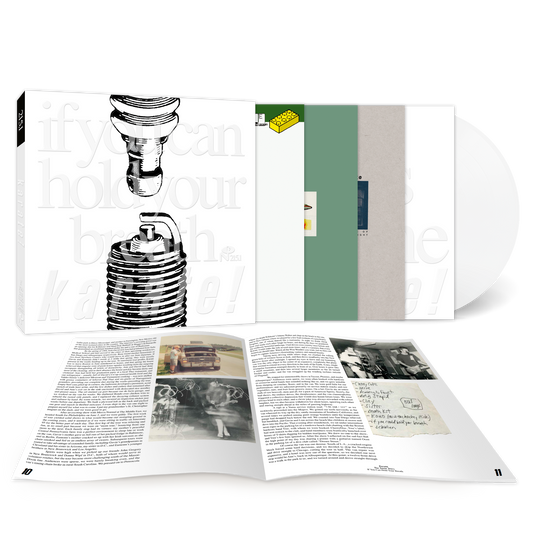
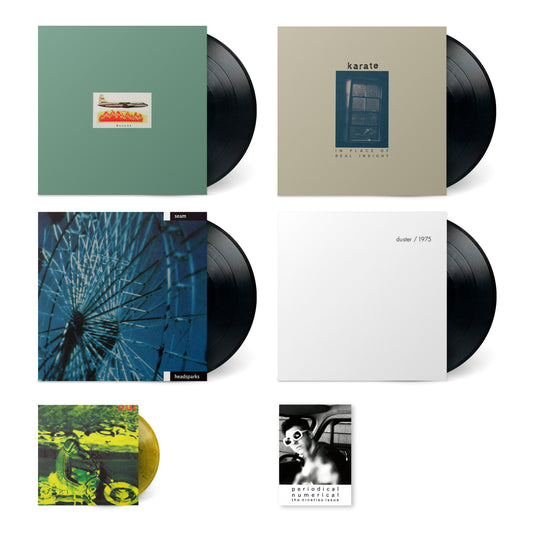
Karate - If You Can Hold Your Breath
Within the East Coast’s cast of early 90’s white-knuckle punks, relentlessly-affected indie rockers and the various purveyors of scene spew that fell in between, few acts were able to craft something as inimitable as Karate. In a bandscape of massively common influences, the trio’s first five years of its still-evolving run saw a group of young, punk-minded song-spinners flying through uncharted ideas in rock, blending soft-spoken and pensive slowcore with slick guitar moves and straightforward rock urgency all the while careening towards something that somehow spliced the DNA of Wes Montgomery with Fugazi. Post-rock for the lyrically-minded, and not too shy for a guitar solo here and there.
Spotify / Apple Music / YouTube / Bandcamp / Vinyl

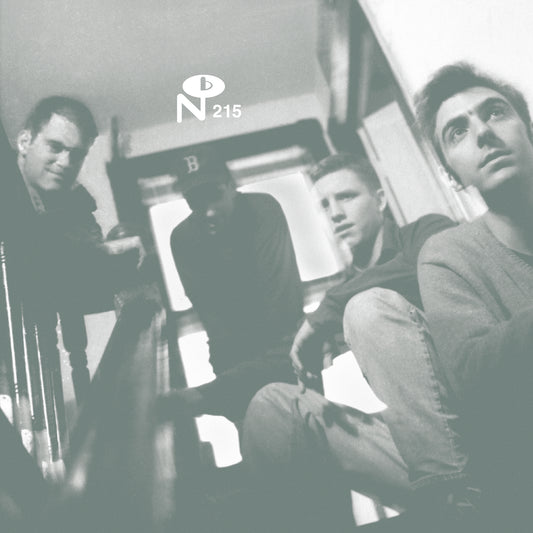
90 Day Men - (It (Is) It) Critical Band
Occurring at the apex of late stage Dischord influence and freakish DIY, roving gangs such as the Nation of Ulysses and Trenchmouth led acolytes like the Windy City quartet 90 Day Men towards the (un)natural intersection of post-punk and the midwestern art school bug that was by then germinating in some of “Post-Rock’s” most memorable U.S. acts. Broken gear, asymmetrical time signatures, ten-minute songs and a sharp attitude underpinned by the mounting ferocity of youth, (It (Is) It) Critical Band meets 90 Day Men in the middle of a serious crisis of genre. Resting somewhere in the strange crevice between The Hal Al Shedad and Tortoise lays the 90 Day Men’s debut LP, tracked, then scrapped, then tracked again within the ever-yeah-unfolding drama that is Chicago.
Spotify / Apple Music / YouTube / Bandcamp / Vinyl





![From The Vapor Of Gasoline [Y2K Edition] vinyl record partially pulled from green abstract art album cover](http://numerogroup.com/cdn/shop/files/mercuryprogram_LPC1_mockup.png?v=1751895552&width=533)
![Vinyl record with green abstract cover art titled From The Vapor Of Gasoline [Y2K Edition] by The Mercury Program](http://numerogroup.com/cdn/shop/files/mercuryprogram_12in_mockup.png?v=1751895552&width=533)



![Clear vinyl double LP record with cover featuring four men and text "(It Is It) Critical Band [Y2K 25th Anniversary Edition]](http://numerogroup.com/cdn/shop/files/PDmEOFd0m2wSMQJHow_EEmQvz9qqouLVNIj_kmT8sOw.png?v=1758661729&width=533)
![( It Is It) Critical Band [Y2K 25th Anniversary Edition] vinyl record with original album cover featuring band members standing together](http://numerogroup.com/cdn/shop/files/qNTvAcaBOJe5x88XOwSBN78wEadIFVfY__4TiJM6s_M.png?v=1758661731&width=533)